Introduction
Clinical simulation, a vital component of healthcare education, offers a safe and controlled environment for learners to develop technical and non-technical skills. Studies highlight its effectiveness in enhancing performance, clinical knowledge, and learner confidence.1–3 High-fidelity simulation has been shown to improve clinical reasoning, promote safer care, and support decision-making in complex scenarios.4,5 It also boosts learner confidence and readiness for practice.6 As technology in healthcare expands, educational programs must also evolve to incorporate advanced simulation strategies to prepare students for modern clinical demands.7 Simultaneously, there is a shift toward competency-based education in nursing curricula. Competency-based education emphasizes demonstration of mastery over time-based exposure. Simulation, particularly immersive technologies such as virtual reality (VR), offers an ideal platform for competency-based assessment and practice.8
Virtual reality, an emerging simulation modality in healthcare education, provides immersive, interactive environments that support realistic practice of clinical skills without patient risk.9,10 A recent meta-analysis of randomized controlled trials revealed that VR significantly improved clinical skills, reduced procedure time, and increased satisfaction and confidence compared to traditional methods.11 Virtual reality enhances clinical performance, procedural competence, and decision-making in high-stakes situations.11,12 Virtual reality has proven effective in preparing learners for rare or challenging clinical procedures, such as fiberoptic intubation and central venous catheter placement.13 A systematic review also found that immersive VR improves procedural skill acquisition in surgical trainees.³ Despite these benefits, VR integration can be time-intensive, resource-heavy, and dependent on faculty training and infrastructure. This methods paper outlines how our nurse anesthesia program implemented VR, including planning, implementation, challenges, lessons learned, practical tips, and future directions for immersive simulation.
Needs Assessment and Initial Planning
Our move toward VR integration was driven by both necessity and a desire for innovation. The COVID-19 pandemic highlighted gaps in our ability to deliver experiential learning, particularly when in-person simulation was suspended. Although in-person didactic instruction transitioned smoothly to Zoom, hands-on training came to a halt, and anesthesia-specific virtual simulation options were scarce. This disruption, combined with student feedback requesting more opportunities to repeat simulation activities, pushed us to explore VR as a flexible, repeatable, and self-directed alternative. Constraints such as operating room (OR) space, faculty time, and scheduling made traditional repeat simulation difficult, whereas VR offered a promising solution aligned with our educational goals.
We developed broad learning objectives for VR integration, including enhancing experiential learning, supporting skill development, strengthening decision-making, and boosting student confidence before clinical placement. We also began collaborating with our simulation center to explore budget, logistics, and readiness. Our search for suitable VR platforms included online research, consultation with colleagues, and hands-on exploration of technologies showcased at national conferences (e.g., American Association of Nurse Anesthesiology [AANA] Annual Congress, International Nursing Association of Clinical Simulation and Learning, and AANA Assembly of Didactic and Clinical Educators). These efforts helped us evaluate platform capabilities and constraints, ultimately leading to the selection of SIMVANA Anesthesia V2.9.0323 as the best fit for our program.
As an integrated program, we determined that including VR in the first and second years of the curriculum would maximize its impact. During the first year of the 3-year program, students focus on didactic learning and simulation training. In the second year, they begin limited clinical experiences. Using VR at these stages strengthens understanding of anesthesia concepts before students move into the third year, which is primarily clinical. We determined that a phased rollout with a semester-long pilot to prepare for curriculum integration would best suit our needs. This approach allowed us to address logistical, faculty, and curricular considerations before fully incorporating the technology into our simulation curriculum.
Materials and Equipment
Technology Overview-SIMVANA
SIMVANA is a VR platform that enhances anesthesia education through immersive, interactive simulations. Using Meta Quest 2, 3, or 3s headsets, students enter a virtual OR to practice essential skills such as anesthesia machine checkout, airway management, rapid sequence induction, and responding to complications like laryngospasm or equipment failure. These topics require repeated exposure to reinforce learning and build competency but can be time-consuming to teach through traditional simulation methods.14 SIMVANA also offers structured lessons in pharmacology, airway anatomy, and anesthesia gas machine function using visual guides, step-by-step instruction, and contextual quizzes to check comprehension.14 These concepts are beneficial for mastering complex concepts like anesthesia gas machine mechanics. The educator portal supports curriculum integration by allowing faculty to assign modules, monitor progress, and tailor content to course objectives. This helped us align VR within existing simulation-based courses and identify students needing additional support.
Methods
Budget and Resource Planning
As with any new technology, careful budget and resource planning were essential to our VR integration. We aimed to balance initial investment with long-term sustainability, knowing cost would shape the scope and scale of implementation. We also had to consider where VR fit best in the curriculum, as placement would affect how students experienced the content and the number and duration of licenses needed.
With our initial budget and resource planning, we considered potential benefits and limitations as part of our decision-making process. On the positive side, VR offered the potential to reduce faculty workload in some areas, provide students with early exposure to anesthesia concepts before simulation and clinical experiences, and improve their comfort with the anesthesia environment. It also created new opportunities for faculty development and supported innovation within both our program and the school of nursing’s broader simulation efforts. The technology fit well with our existing curriculum, making alignment straightforward. Our main concerns were financial. Startup costs were high, and continued investment requires sustained funding as the program grows. Other challenges included the learning curve for faculty and students, the additional workload involved in initial setup and curriculum integration, limited information on long-term outcomes of VR, and reliance on vendor stability for updates and support. Ultimately, we chose to move forward with implementation, believing that the investment in student learning, innovation, and faculty development would outweigh the initial challenges.
Startup expenses included 10 Meta Quest 3 headsets (Reality Labs, Meta Platforms; United States, 2023; standard 128 GB model), compatible laptops for screen casting, a storage cart, cleaning supplies, and SIMVANA licenses. We also accounted for simulation staff and faculty time for setup, training, and early troubleshooting. To reduce costs, the rollout was limited to 1 cohort of 16 students in their first year of the program.
Capital expenditures include the renewal of software licenses and potential replacement or upgrade of hardware over time. While these costs are lower than the initial startup, they require ongoing institutional support and careful planning as the program expands. Initially, only one-year licenses were purchased for integration with the first-year cohort. As we moved into the second year, we purchased new licenses for the incoming first-year students and extended the existing licenses for the rising second-year cohort. While extending licenses requires additional costs and additional budget planning, this approach allows us to maximize the value of the software by taking advantage of the more complex scenarios in SIMVANA that align with second-year learning needs, while still providing incoming students with appropriate introductory content. Maintenance considerations include time allocated to simulation staff for device management, software updates, and technical support, as well as replacement of consumables such as batteries and headset accessories. Ongoing collaboration with the vendor has been helpful in managing these operational needs and troubleshooting issues as they arise.
Stakeholder Engagement
Engaging key stakeholders was vital to the successful integration of VR into our program. From the beginning, we recognized that meaningful implementation would require collaboration across multiple levels, including administration, Certified Registered Nurse Anesthetist faculty, our simulation team, and students. Administrative support was crucial in approving the initial investment and aligning the project with institutional goals around innovation and technology-enhanced learning. Nurse anesthesia faculty shaped the educational strategy by identifying content that aligned with course objectives, determining how VR could support progression, and participating in hands-on training to ensure readiness.
The simulation center team, a separate group of dedicated simulation personnel, managed operational integration. The team coordinated directly with SIMVANA to establish access and licensing, ensured all equipment was functional and maintained, and provided technical support to faculty and students. Involving the simulation team early allowed us to anticipate potential challenges related to hardware, connectivity, and scheduling, resulting in a smoother rollout. With the simulation center actively working toward accreditation through the Society for Simulation in Healthcare, there was added incentive to incorporate innovative technologies such as VR. This aligned well with accreditation standards related to educational innovation and the advancement of simulation-based practice.15
Most importantly, we engaged students throughout the planning and implementation process. During the semester-long pilot, students provided feedback on usability, learning value, and logistical challenges. Their insights influenced scheduling and module selection. The enthusiasm and engagement of students reinforced VR’s role as a meaningful addition to the curriculum. Involving all stakeholders early and consistently, particularly the learners themselves, fostered shared ownership, addressed concerns proactively, and created a supportive environment for innovation in nurse anesthesia education.
Institutional Support
Institutional review board determination confirmed that this project did not meet the regulatory definition of human subjects research. As such, it was classified as not human subjects research and did not require IRB review or exemption status in accordance with institutional policy.
Operational Considerations and Implementation Process
Physical Space
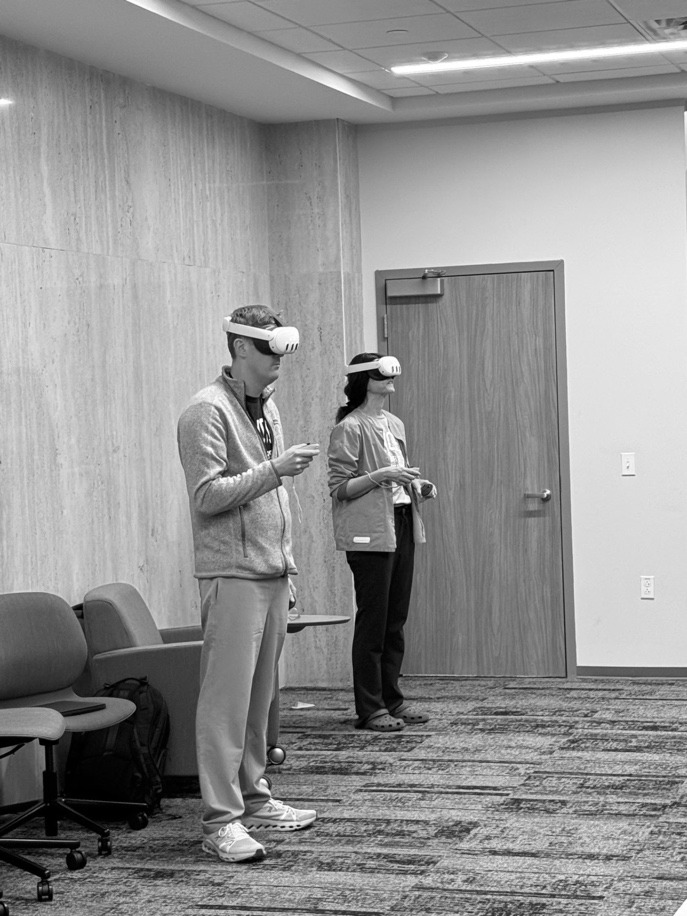
The smooth, safe, and effective integration of VR into our nurse anesthesia program required deliberate operational planning. One of the first and most critical operational steps was identifying an appropriate physical environment for VR use. We initially selected a large classroom space, anticipating that learners would require a significant amount of room to move freely and safely while wearing headsets. Because we purchased 10 headsets, our goal was to create a layout that was both spacious and secure for multiple students to engage in VR simultaneously. However, after trialing the technology, we found that the operational features of SIMVANA were well-optimized for use in a smaller space than expected. We determined that approximately 6 square feet per learner was sufficient to complete their assigned simulation without interference or risk of harm (Figure 1). To enhance safety, we also paired each student with a partner acting as a spotter to help ensure they remained within their designated area.
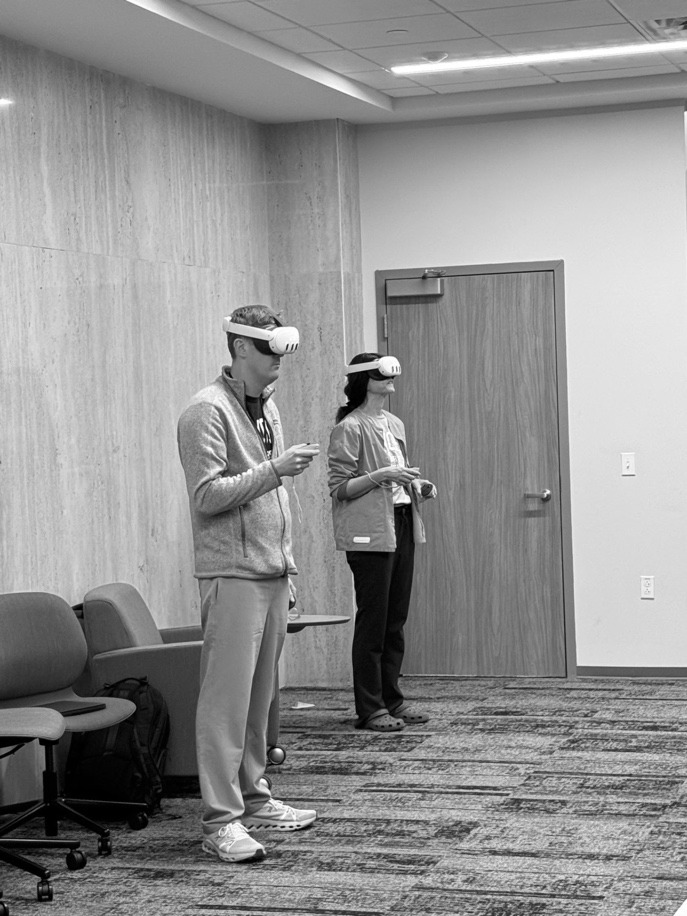
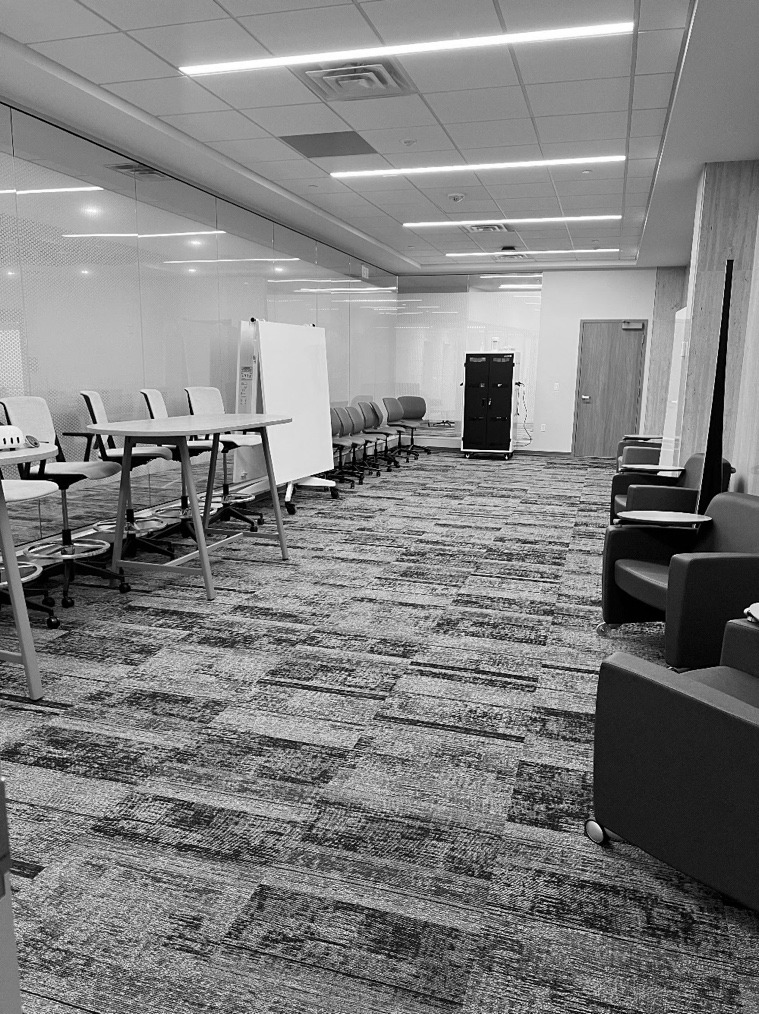
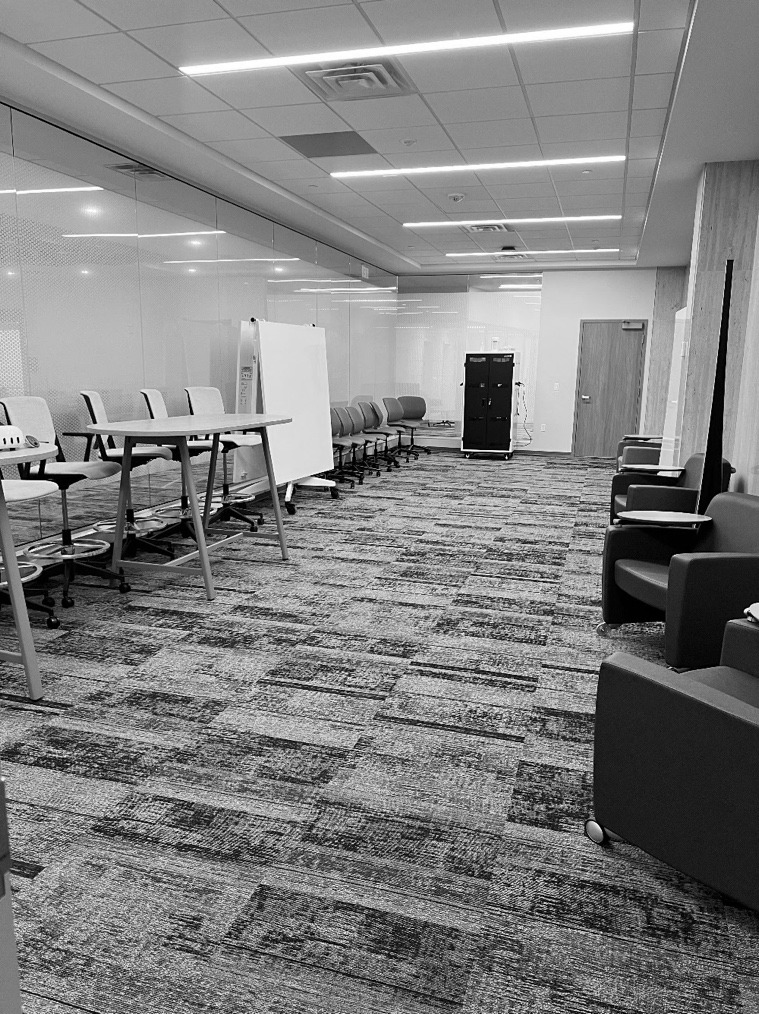
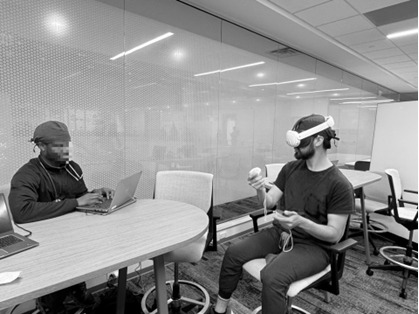
As a result of these findings, we transitioned to a smaller classroom termed the Innovation Hub, which provided a more practical and efficient environment for VR sessions. The facility’s operations team was recruited to rearrange the furniture to the room’s periphery prior to each VR session. Rearranging the furniture cleared the central space, allowing students to use the headsets safely while remaining under observation from a designated spotter. This setup not only made better use of available resources but also promoted an organized, focused learning environment conducive to immersive simulation (Figure 2).
Technical Infrastructure
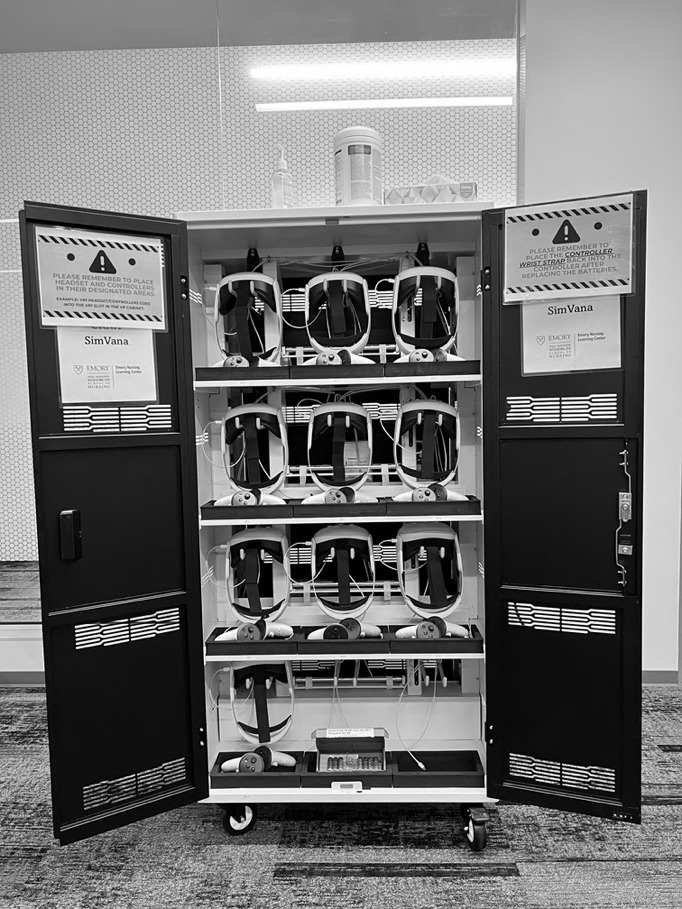
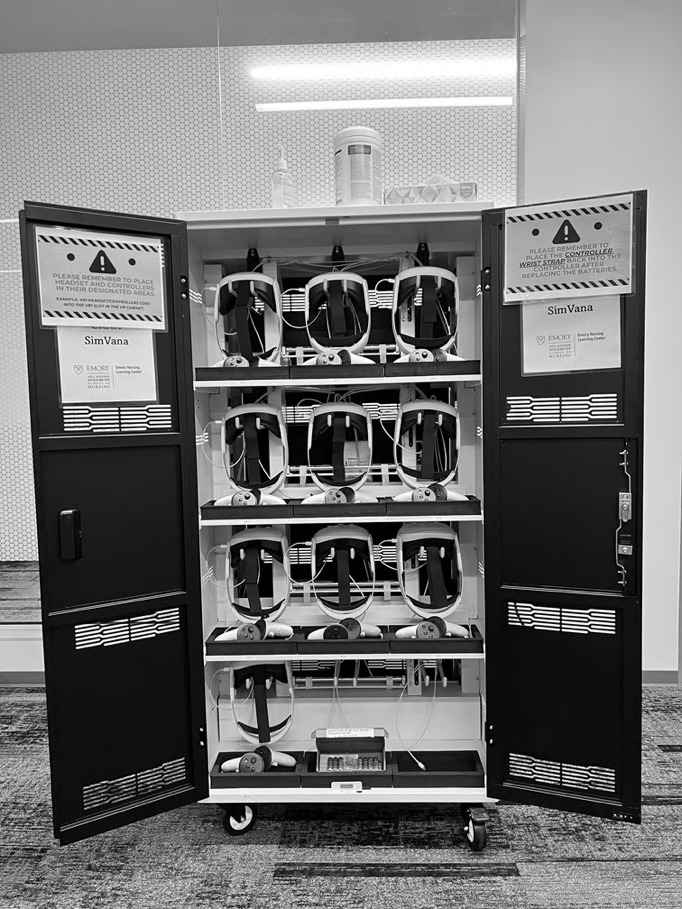
Establishing the necessary technical infrastructure was essential to the successful implementation of VR in our nurse anesthesia program. We equipped a dedicated VR station with Meta Quest headsets, controllers, extra AA batteries for the handheld controllers, and compatible laptops. To maintain functionality and hygiene, equipment was fully charged, cleaned between uses, and stored in an organized manner. A VR-specific storage and charging cart, called the Looking Glass, streamlined preparation and cleanup by allowing for efficient charging, secure storage, cable management, and mobility of multiple headsets (Figure 3).
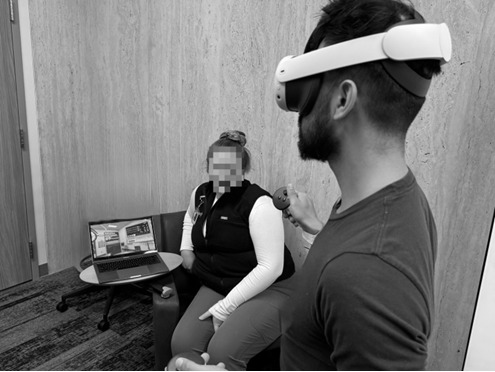
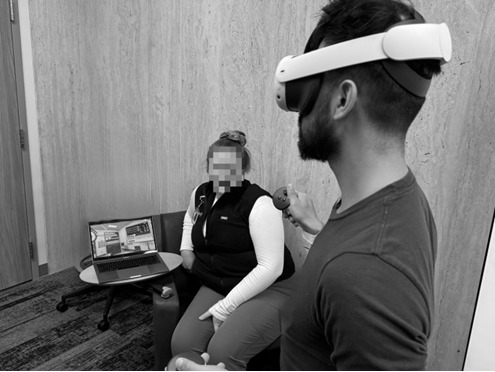
Several laptops were configured to allow real-time casting of each headset, allowing each student spotter to view the simulation experience as it unfolded (Figure 4). This setup ensured student physical safety and provided additional content exposure for the spotter, promoting peer discussion and reinforcing key concepts during debriefing.
To establish reliable wireless connectivity, our Simulation Technician worked with the university’s Information Technology (IT) department to configure the headsets and obtain access to the secure network. This process required formal paperwork, multiple meetings to review platform function and security, and a full internal IT review prior to approval. Sponsored accounts and network access took several months to finalize. Once established, this support facilitated uninterrupted SIMVANA functionality. The Simulation Technician also managed hardware performance and served as the technical point of contact for students and faculty. This proactive support minimized disruptions and ensured a smooth, dependable rollout of VR into simulation-based learning.
Licensing and User Access
Licensing and user access for faculty and students were coordinated in advance through close collaboration with SIMVANA. Because SIMVANA is compatible with Meta Quest devices, students and faculty with personal headsets could also access the platform remotely, supporting flexibility and self-directed learning outside of scheduled sessions. While not required, students have engaged in additional self-directed learning outside of program requirements due to this option.
Student Comfort and Safety
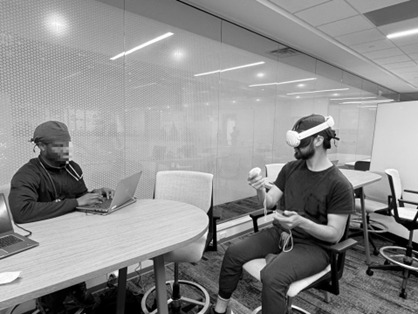
We anticipated potential discomfort with VR use and proactively limited session duration. Students were encouraged to pause or opt out at any time to ensure psychological and physical comfort. To provide an alternative way to engage with the content, students who experienced discomfort in the virtual environment were permitted to observe the experience on the screen-cast laptops. As SIMVANA’s design allows for multiple ways to interact with the virtual environment (e.g., sitting, standing), we were able to offer a seated participation option. This helped reduce motion sensitivity and increase comfort (Figure 5).
Faculty Training & Familiarization
A critical step in integrating VR into the curriculum was ensuring faculty confidence with the technology. One faculty member received direct training from SIMVANA, gaining familiarity with the platform and serving as a peer trainer for the rest of the team. Before introducing the technology to students, faculty participated in a dedicated training session to explore the software and hardware, navigate the VR space, familiarize ourselves with performing tasks in the VR environment, review available modules, and align VR content with course objectives.
Participants and Program Integration
Participants
After reviewing SIMVANA’s learning experiences, faculty identified first-year students as the ideal starting point for integration, given the alignment of available modules with early anesthesia education. These students had no prior experience providing anesthesia in the OR and had not yet started clinical placements, making them well-suited for foundational VR-based learning. Limiting the rollout to 1 cohort of 16 students helped control costs and made the process more manageable.
Pilot Testing
To evaluate practicality and inform broader implementation, we conducted a small-scale pilot of the SIMVANA VR platform during the first semester of the first-year nurse anesthesia cohort. The pilot was embedded into one of the cohort’s existing courses and included 6 two-hour VR sessions held outside of regularly scheduled class time. These sessions were designed to introduce students to the virtual environment. The sessions were geared toward basic functionality of the VR equipment and foundational anesthesia content.
The goal of the pilot was to increase comfort and familiarity with the VR software. As part of this pilot, students assessed their ability to navigate and use the platform. Because SIMVANA allows for a flexible setup based on user preference and space availability, students were able to choose from different interaction modes: walking within a larger space to virtually pick up and manipulate items, standing in place with a more limited range of movement, or remaining seated while bringing the virtual environment to them. This flexibility allowed students to explore different options for interacting with the VR environment during the pilot and helped them determine their preferred setup.
The sessions also emphasized basic mechanics such as headset use, environmental interaction, and navigation within the simulation. Students completed modules on VR navigation and communication, ventilation basics (manual, assisted, and volume-controlled), and pharmacology topics aligned with prior coursework, including cardiac medications (e.g., ephedrine, esmolol), neuromuscular blockade and reversal, and anesthetic agents (e.g., ketamine, opioids, and propofol).
Curriculum Integration
Following the pilot, the nurse anesthesia program expanded VR integration into the curriculum. SIMVANA’s foundational modules aligned well with the Principles of Anesthesia course, which already included weekly high-fidelity simulations covering induction, intubation, emergence, anesthesia machine checkout, and supraglottic airway placement. Virtual reality simulations on general anesthesia induction and anesthesia machine function served as effective extensions of these core topics.
Faculty reviewed SIMVANA modules alongside the course syllabus to identify logical integration points. A VR schedule was developed to mirror weekly lecture and simulation topics, ensuring alignment with course objectives. Modules featuring machine troubleshooting and step-by-step anesthesia machine checkout were especially valuable, reinforcing complex concepts through guided hands-on practice before clinical placement.
Challenges, Lessons Learned, and Limitations
As with any new instructional technology, the implementation of VR into our curriculum presented some challenges, valuable lessons, and limitations to consider for broader application. Physical space was one of the first operational challenges encountered. Three rooms were trialed before selecting one with suitable size and availability. While we initially overestimated space requirements, we found that SIMVANA’s design enabled effective use in a relatively small area. We determined that approximately 6 square feet per user was sufficient.
Headset and controller battery life posed ongoing logistical challenges. The headset battery life averaged 2 hours, while the handheld batteries required replacement after about 20-30 hours of use. While we initially planned to use 8–10 headsets per session, we found that limiting use to 4–5 headsets at a time was more sustainable given headset battery constraints. This adjustment worked to our advantage, ensuring fully charged headsets were always available. Also, keeping spare controller batteries minimized mid-session downtime.
Determining the optimal number of students per session and developing a rotation schedule that considered clinical, simulation, and academic responsibilities proved challenging. After testing several configurations, we found that offering an open VR lab alongside students’ weekly high-fidelity simulations provided the best balance of access and flexibility. Learners could complete their assigned modules before or after their scheduled simulation time, which eased scheduling demands and prevented overburdening faculty or simulation staff.
Initially, modules were assigned without a specified completion deadline, which led to inconsistent engagement. To address this, we clarified that the modules were mandatory and established a 2-week completion window. The course coordinator was able to monitor progress and verify completion using the instructor platform.
Another learning curve was navigation within the virtual environment. For students unfamiliar with VR, tasks like picking up virtual objects took practice. Allocating time for tutorial sessions and repeated exposure helped build confidence and reduce frustration.
Faculty comfort and experience with VR were more limited than anticipated. Most instructors had little to no prior exposure to immersive technology, which necessitated focused training and hands-on practice prior to implementation. Designating 1 faculty member to receive vendor training and lead peer instruction helped prepare the faculty for facilitation.
In reflecting on the broader limitations of this project, we recognize that our program’s context may not be generalizable to all institutions. We are a relatively small program operating within a well-resourced simulation center, with administrative support and available infrastructure. Programs with fewer resources, limited access to dedicated simulation spaces, or less institutional support may face greater barriers in adopting VR technology. Additionally, we have only completed 1 full year of implementation and continue to evaluate long-term outcomes and sustainability.
Results
Faculty and students were surveyed to assess prior use of VR, impressions of usability and workload, and overall feelings about the experience. Along with structured survey items, participants shared open-ended comments about what they liked or found challenging. Results support the usability of SIMVANA as a low-burden, cognitively manageable tool for simulation-based learning.
Most participants (59%) reported no prior experience with VR, 27.3% indicated that they rarely used VR prior to the survey, and only 9.1% reported using VR on a weekly basis. Gaming was the most frequently cited prior VR activity (45.5%), with the Oculus Rift/Meta Quest being the most used device among all participants who reported having used VR in the past. These findings suggest that for many participants, this implementation represented their first meaningful interaction with VR in an educational setting.
To assess perceived usability of the system, participants completed the System Usability Scale (SUS), a validated 10-item questionnaire that results in a composite score ranging from 0 to 100, with higher scores indicating greater usability.16 The mean SUS score among respondents (N = 21) was 76.6 (SD = 11.79), with scores ranging from 50 to 95. The interquartile range was 72.5 to 85. These results indicate that the VR system was perceived as having good to excellent usability, exceeding the standard benchmark of 68 used to indicate acceptable usability.
Participants completed the NASA Task Load Index (NASA-TLX) to evaluate perceived workload across 6 dimensions: mental demand, physical demand, temporal demand, effort, performance, and frustration.17,18 Items were rated on a 7-point Likert scale, with higher scores indicating greater perceived workload, except for the performance item, which was reverse-coded (higher scores reflect greater perceived success). The overall mean workload score was 2.45 (SD = 0.94), indicating a low perceived task load associated with the VR-based simulation. Among the 6 dimensions, mental demand had the highest average score (M = 2.82, SD = 1.50), followed by effort (M = 2.50, SD = 1.34). In contrast, temporal demand (M = 1.45), physical demand (M = 1.86), and frustration (M = 1.55) were rated particularly low, suggesting that participants experienced minimal time pressure, physical exertion, or emotional strain using the VR platform. The mean performance rating, reverse-coded to reflect perceived success, was 4.50 (SD = 2.06), indicating that participants generally felt capable and successful in completing the tasks.
Participant Feedback
Open-ended survey responses revealed consistent themes describing the experience as engaging, intuitive, and immersive. One participant noted, "Very fun. I loved the realism of the virtual environment. Another stated, "I enjoyed it! Very interactive and intuitive." One participant described that they liked “The life-like scenarios and how every button on the machines and screens work.”
Despite the generally positive feedback, a few participants experienced physical discomfort, such as nausea and feeling “hot”. One reported, "Walking in the OR made me nauseous," while another mentioned, "When you first get in the simulation, it can be a little disorienting." While the Meta Quest 3 is designed to accommodate users wearing glasses, 1 participant commented that the headset was not well-suited for the shape of her glasses and noted that they would wear contact lenses in the future. Suggestions for improvement included offering a seated option or refining movement controls.
Discussion
Recommendations and Reflections
Based on our experience, we offer several recommendations for integrating VR into nurse anesthesia simulation education. Provide ample time for users to become comfortable with the technology. For our cohort, experience levels varied significantly, and some needed extra time to navigate and complete assigned modules. Scheduling adequate time for VR experiences will promote equitable learning opportunities.
Early collaboration with your simulation and IT teams is critical. Their expertise can help anticipate and resolve logistical issues such as equipment setup, connectivity, and user onboarding. Having a clear understanding of your institution’s timeline and process for reviewing and approving new applications for network access is also beneficial. Sponsored accounts and network access may require several months to finalize.
Faculty should complete all modules before assigning them to students. This ensures alignment with objectives and allows instructors to anticipate difficulties and provide guidance. During our initial testing, users found that certain tasks, such as taping the endotracheal tube, detaching syringes, and removing the face mask from the circuit, were difficult to maneuver in the VR environment and limited fidelity. Having trained faculty available alleviated some of the frustration with these tasks.
Keep extra batteries, chargers, and backup devices readily available. Minor technical issues can cause disruptions if not addressed quickly. Selecting an appropriate physical space for VR use optimizes the experience. A private, low-traffic environment is ideal, allowing students to fully engage in the simulation without distractions or interruptions. The space should also offer enough room for students to move safely, especially if standing or walking while using the headset.
Programs should consider screen casting logistics when planning the physical setup. Consider your casting setup in advance, which can include either group viewing on a shared screen or individual laptops. Casting will influence both space requirements and equipment needs. For example, casting to individual laptops allows spotters or faculty to follow along with each student’s experience, but requires a greater number of devices. In our case, laptops were provided by the simulation center and used by spotters. Students were also permitted to bring their own laptops for screen-casting, which may present a more affordable option to programs wanting to integrate VR technology without having to purchase laptops. Finally, maintain open communication with the vendor. SIMVANA’s team was responsive and receptive to feedback, which streamlined our implementation and fostered a collaborative relationship that enhanced our rollout.
Future Directions
As we build on the early success of integrating VR into our curriculum, several areas for exploration have emerged. We plan to evaluate the return on investment of VR integration from both educational and operational perspectives. This includes assessing gains in learner engagement, preparedness, and confidence relative to the costs of equipment, licensing, and faculty time. While the initial implementation required a substantial faculty time investment, we anticipate that faculty time commitment may decrease in subsequent years. Future work will focus on formally evaluating faculty workload and long-term sustainability associated with supporting VR instruction within the curriculum.
Another area of interest is exploring how VR integration influences student progression and performance. We hope to analyze whether early exposure to immersive simulation correlates with improved competency and enhanced clinical decision-making during subsequent clinical experiences. We are actively evaluating the impact of VR use on performance and efficiency during high-fidelity OR simulations, including metrics such as time to intubation, progression through the induction sequence over the semester, and successful completion of the anesthesia gas machine checkoff. We are also exploring whether students who trained with VR feel more comfortable and confident entering their first OR rotation compared to those who did not use VR. In addition, we see potential for using VR in remediation, self-directed learning, and interprofessional education. We will continue exploring ways to broaden the technology’s impact across diverse learning needs.
To maximize its investment, our simulation center is exploring how existing VR headsets can support other programs within the school of nursing. The team is evaluating additional software to promote interdisciplinary use and extend immersive learning opportunities across multiple areas of study.
Conclusion
Integrating VR into our nurse anesthesia program has been a meaningful and manageable advancement in simulation-based education, supporting the shift toward competency-based learning. Through thoughtful planning, strong collaboration with our simulation center, and early partnership with the SIMVANA team, we successfully aligned immersive VR experiences with course objectives and increased student engagement. As technology evolves, we will continue leveraging innovative tools to enhance experiential learning and prepare students for safe, effective practice. Our experience highlights that with strategic planning and collaboration, VR can become a powerful, sustainable component of nurse anesthesia education.