INTRODUCTION
The integration of simulation into medical curricula has become a cornerstone of modern healthcare training. Formal endorsements from the American Nurses Credentialing Center (ANCC),1 the American Association of Colleges of Nursing (AACN),2 and the Council on Accreditation of Nurse Anesthesia Educational Programs (COA)3 have been made to encourage programs to increase the amount of simulation used in education. Recognized for its capacity to enhance clinical skills, interprofessional teamwork, and student confidence, simulation is a vital tool for reducing medical errors in high-stakes environments.4,5 For nurse anesthesia residents (NARs), these experiences serve as a bridge between didactic classroom theory and the unpredictable complexities of high-acuity patient care. In the same way a flight simulator allows a pilot to master emergency maneuvers and complex navigation in a controlled environment before ever leaving the ground, simulation in nurse anesthesia provides a virtual “cockpit” for students to refine their skills without the immediate risk of high-stakes clinical consequences. Despite these benefits and formal endorsements, there remains a critical lack of comprehensive data regarding how Certified Registered Nurse Anesthetist (CRNA) programs across the United States implement simulation education. The aim of this descriptive study was to quantify reported simulation utilization and resource integration into nurse anesthesia training programs’ curricula to support and promote program planning and potential future standard-setting simulation criteria.
A variety of modalities of simulation are common in anesthesia training programs, which has resulted in a varied approach to how simulation is used in nurse anesthesia. Low-fidelity modalities, such as task trainers, role playing, and clinical vignettes, offer cost-effective methods for developing both technical skills (e.g., intubation and central line insertion) and nontechnical skills (e.g., communication and critical thinking). Conversely, many programs utilize high-fidelity simulations consisting of sophisticated computerized equipment, responsive manikins, immersive environments, and virtual reality.6 Some task trainers combine a responsive component, allowing the learner to manipulate an ultrasound probe to practice point of care ultrasound (POCUS) and determine the volume in the stomach or the potential for difficult airway for intubation. High-fidelity simulation can provide a more realistic experience of anesthesia encounters, allowing students to apply their learning and challenge their own comprehension.
Nurse anesthesia programs are generally structured as front-loaded or integrated. They all require at least 36 months of full-time study, culminating in a doctorate degree. Programs using the front-loaded approach will provide comprehensive didactic content for the first 16-18 months of the program, followed by a full-time clinical residency component for the remaining months. In contrast, the integrated approach provides advanced coursework in physiology, pathophysiology, and pharmacology, but weaves the anesthesia didactic curriculum into a part time clinical residency schedule. The integrated approach eventually culminates in a full-time clinical residency for approximately the final 12 months.
Depending on the type of program delivery, faculty resources may be allocated quite differently. Faculty workload and salary are major considerations when budgeting resources for simulation. Based on the extent of simulation in the curriculum and the number of students in each cohort, faculty training in simulation education should also be considered. A qualitative study by Quilici et al7 explored this issue by interviewing 14 medical and nursing faculty members regarding their experiences with clinical simulation training and found that faculty faced considerable difficulties allocating sufficient time to plan, execute, and debrief simulation scenarios due to the overwhelming number of students they had to accommodate. Similarly, a recent study of nurse anesthesia faculty also reported that only 40% of them received any formal training in simulation.8
The financial commitment required to successfully incorporate robust simulation into curricula may be a barrier due to the faculty component, as well as equipment expenses. High-fidelity manikins can cost as much as $100,000.9 Low-fidelity simulation equipment also provides important learning experiences, but still requires a significant investment in durable trainers and disposable items. Task trainers for airway (intubation and mask management), lumbar (spinal and epidural insertion), and vascular access (arterial line, central line, and peripheral IV insertion) can cost over $5000 each.9
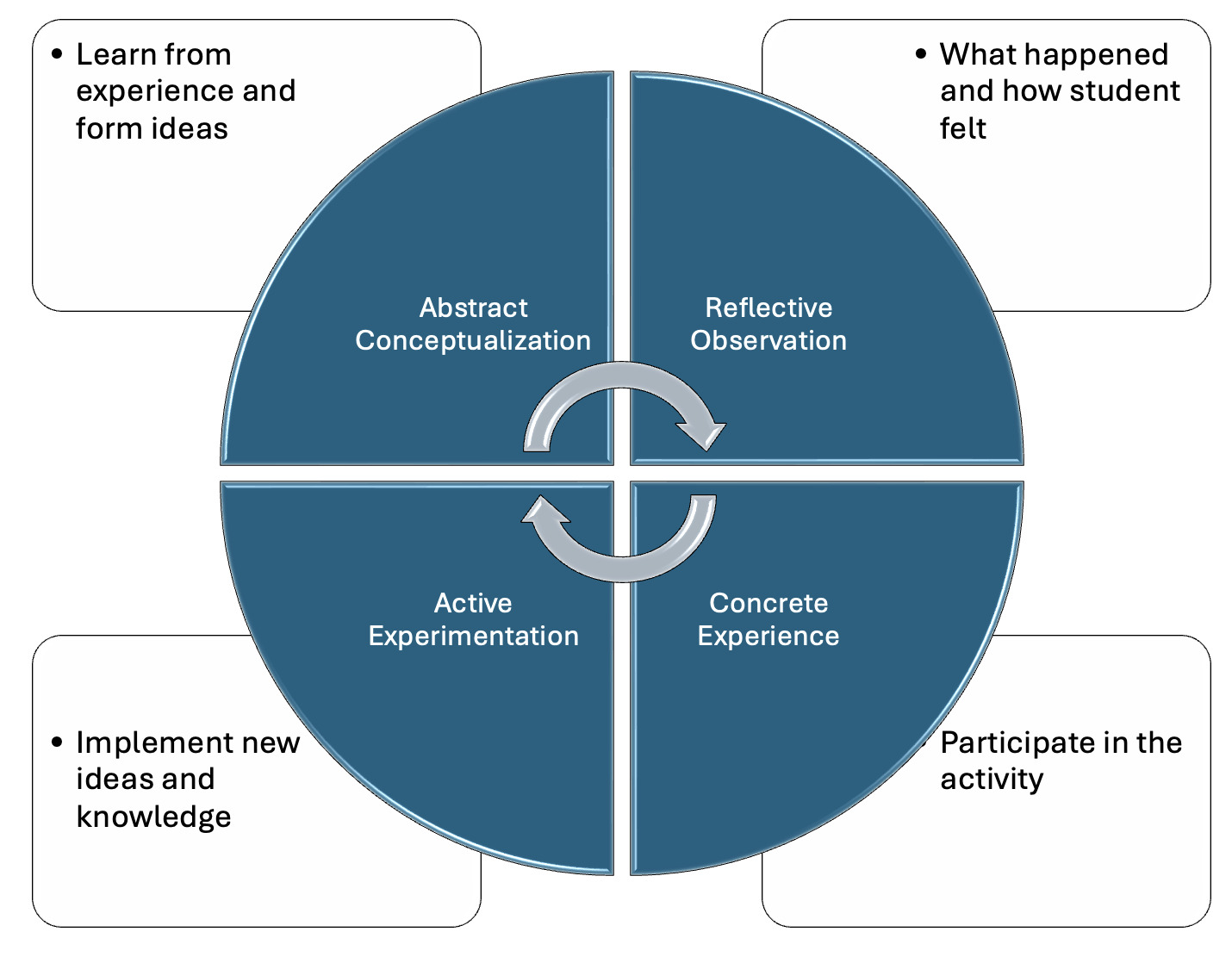
Beyond the significant financial and faculty investments, the success of simulation-based education relies on a structured approach for how NARs process the experiences, learn and modify future behaviors. Experiential Learning Theory, established in 1984 by David Kolb, offers one such structure and informed how the various uses of simulation were framed in this study.10 Because experiential learning depends on learners completing repeated, iterative cycles rather than isolated exposures, a focus on resources as well as frequency and escalating complexity was also quantified.
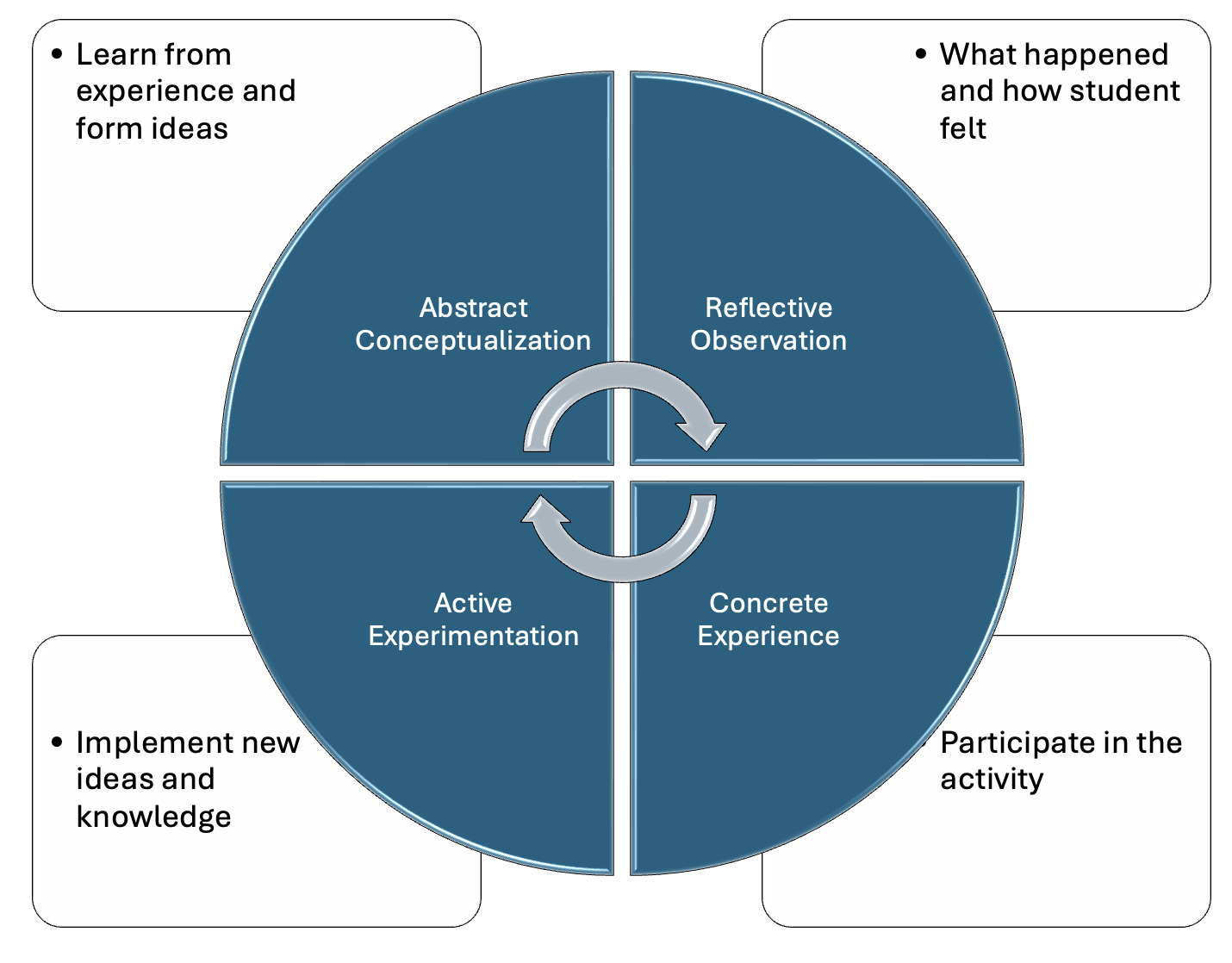
The experiential learning cycle consists of 4 phases (Figure 1): 1. Concrete Experience – This is the experience when the learner is actively participating; 2. Reflective Observation – The learner reflects on the experience, the event’s details, and their personal response to it; 3. Abstract Conceptualization – This phase is when the learner can think logically about the experience, focusing their observations into new thoughts or approaches for a future similar situation; 4. Active Experimentation – This phase allows for the testing of these new ideas in a new experience. These phases provide a lens for interpreting how program-level simulation resources and repeated scheduling, and the use of simulation for assessment may support or constrain learners’ progression through the experiential cycle.10
In the context of nurse anesthesia education, simulation serves as a safe bridge from didactic learning to clinical practice, allowing NARs to engage in repeated, iterative cycles of learning, experimenting, and reflecting before entering unpredictable clinical environments. By framing simulation through this lens, the aim of this descriptive study was to quantify reported simulation utilization and resource integration into nurse anesthesia training programs’ curricula to support and promote program planning and potential future standard-setting simulation criteria.
METHODS
Study Design
This study utilized a non-experimental, cross-sectional design with data collected through the completion of an online survey using Qualtrics. Nurse anesthesia program directors were invited to participate using their publicly available email address listed on the COA website. Inclusion criteria were satisfied by only soliciting program directors listed on the COA webpage, which indicated they administered an accredited program in good standing. As an observational exploratory study, no power analysis was conducted. However, the sample was compared to the known population of nurse anesthesia programs on specific demographic variables to determine whether a representative sample was obtained. This article follows the STROBE guidelines for the reporting of cross-sectional studies.11
Instruments and Measures
The survey items were developed based on previous studies regarding simulation resourcing and input from the simulation experts at Rosalind Franklin University.4,6,8,12 Survey items elucidated the number of faculty resources and support personnel, hours dedicated to skills training, types of trainers and other equipment available, and the types of simulation experiences utilized. Demographic characteristics included cohort size, curriculum delivery method (integrated or front-loaded), and accreditation status. Front-loaded programs were defined as having a defined break in the didactic curriculum at 14-18 months, at which time immersive clinical training began. Integrated programs were defined as initiating clinical training as early as 12 months into the program, with early phases of clinical training integrated with didactic education in the same week. Objective Structured Clinical Examinations (OSCE) were defined as simulation experiences used for summative evaluation of trainees. A “simulation day” was defined as at least 6 hours of planned simulation activities per student in a single day. When determining the use of high-fidelity manikins, that equipment was defined in the survey as a “sophisticated medical simulator replicating human anatomy and physiology for realistic training.” The survey domains were organized in alignment with Kolb’s Experiential Learning Theory10: questions addressing pre-clinical simulation exposure and use of task trainers correspond to the Concrete Experience phase; use of small and large group simulations capture the Reflective Observation phase; OSCE and formal assessment structures to the Abstract Conceptualization phase; and continuation of simulation while engaged in clinical training reflects the Active Experimentation phase. Demographic data were used as potential predictor variables to identify patterns of resources related to program size, pedagogical delivery method, or geographic areas of the country.
Data Collection
The study period ran from May to June 2024, during which time program directors were invited to participate using an explanatory solicitation email. The data collection period took place over the course of approximately 4 weeks, with a reminder email sent 2 weeks prior to the survey closing. The survey allowed participants to skip questions and return to the survey at a later time if they needed to reference their own simulation materials in order to accurately answer the questions. All data was collected using Qualtrics, with raw data maintained on secure university servers. No specific program identifiers were collected. To minimize the chance of identifying a program based on size and geographical location, respondents chose the region in which their program was located rather than a specific state.
Ethical Considerations
This study was approved by the Institutional Review Board in March 2024 (CON24-448) as an exempt study under category 2a, which covers research involving educational tests, survey procedures, interview procedures, or observation of public behavior. Participants indicated their consent to participate by reviewing the overview of the study, any risks to participation, and then used an embedded link in the invitation email to indicate their consent and willingness to participate.
Data Analysis
The demographic data of respondents were analyzed to assess representativeness with respect to geographic distribution and program size. The primary analytical approach was descriptive, with data reported as frequencies, percentages, means, and ranges. Bivariate correlation analysis was conducted to examine relationships between program size and skills training equipment ratios, and group means of the front-loaded and integrated programs related to the number of simulation days was compared using Mann-Whitney U. No additional inferential statistics were conducted due to small sample size and the reported findings should be interpreted with caution.
RESULTS
Demographic Characteristics of Participating Programs
At the time the study was conducted, there were 136 accredited nurse anesthesia programs in the United States and Puerto Rico. A total of 22 usable responses (16%) were collected. Table 1 shows data collected from the survey distribution, including the number of students in each cohort for the respondent programs compared to the national average, the range of students for both groups, and the number of integrated versus front-loaded programs. It is unknown how many programs utilize an integrated or front-loaded didactic approach nationwide.
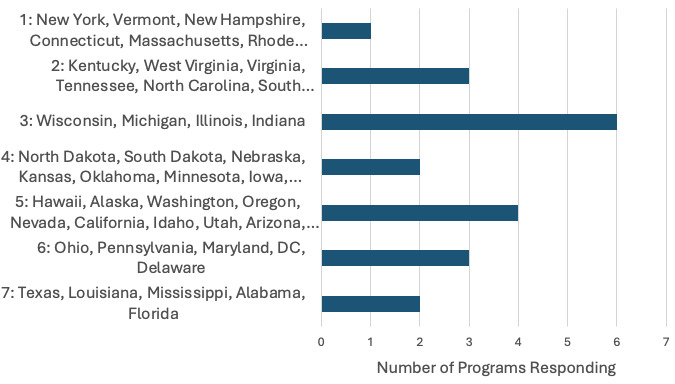
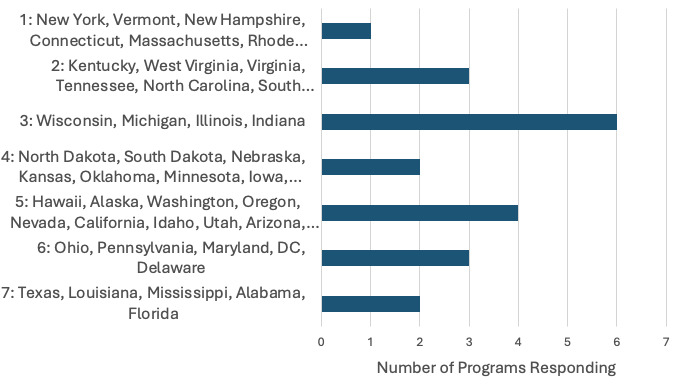
Figure 2 demonstrates the wide geographic representation of survey respondents. Based on these responses, data was captured from all 7 regions of the US, with the highest representation coming from the Midwest and Southeastern areas. Programs with the largest cohorts were found in Regions 3 and 7, with one program enrolling 50 students and another enrolling 70 students, respectively. The programs with the smallest cohort of students were from Regions 5 and 1, with 15 and 14 students, respectively. This sample was diverse with regard to geographic location, type of curricular delivery, and program size, which is representative of nurse anesthesia programs as a whole.
Task Trainers
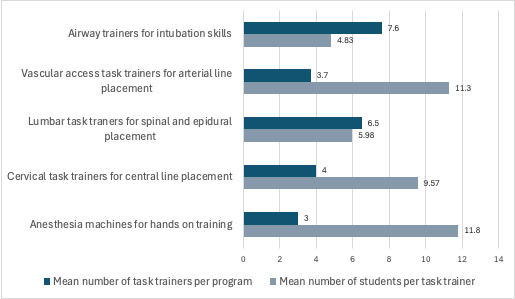
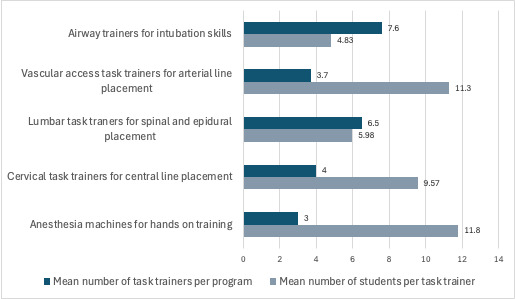
When asked about the availability of task trainers, a total of 19 responses were obtained. Programs reported having a range of 2 to 20 airway task trainers for intubation, 0 to 10 vascular access trainers for arterial line and peripheral IV insertions, 2 to 15 lumbar task trainers for spinal and epidural placement, and 1 to 10 cervical task trainers for central venous catheter insertion. Table 2 also provides data on the number of learners per trainer to control for cohort size. The mean number of trainees for each piece of training equipment is displayed in Figure 3. Airway task trainers for developing intubation skills were the most abundant resource, with only 4.8 trainees per trainer, while anesthesia machines were the most scarce resource, with an average of 12 trainees per machine. This is likely due to the cost of the anesthesia machine compared to other specific task trainers. Programs reported a range of 1 to 6 machines available within an individual program for skill development. The number of students per specific task trainer ranged from 5.98 (lumbar spinal/epidural task trainers) to 11.3 (vascular access task trainers). Bivariate correlation analysis did not reveal any significant correlations between cohort size and the number of task trainers available to the learners.
Ultrasound machines provide opportunities for developing various skills, including peripheral nerve blocks, IV and arterial line insertion, and POCUS. All (n = 19) respondents reported having ultrasound machines available for simulation use. Although the survey did not specify the types of ultrasound machines, programs reported having between 1 and 56 machines, with a sample mean of 10.37. There are multiple types of ultrasounds available on the market, ranging from portable hand-held devices that plug into an iPad to a free-standing SonoSite with multiple probes. It is not known what types of devices the programs were using in their simulation environments.
Simulation Days
The number of simulation training days before and after entering clinical training is provided in Table 3, with respondents categorized into integrated and front-loaded programs. The survey received an equal number of responses from each group (N = 11). On average, the front-loaded group reported 15.1 simulation days prior to the NARs entering clinical training and an average of 8 additional days after clinical training had started. While the integrated programs reported a mean of 10.3 simulation days prior to NARs entering clinical training and an additional 11 days after clinical training had begun. The range in total simulation days varied widely among both types of programs, with front-loaded programs providing between 7 and 50 simulation days, and integrated programs providing between 3 and 45 simulation days.
When 2 outliers were removed from the integrated program data (40 and 45 total days of simulation), the mean total number of simulation days was higher in the front-loaded programs compared to the integrated programs (23.1 days of simulation vs 15.28 days of simulation, p = 0.086). However, the lack of statistical significance is likely related to small sample size.
Advanced Training
Programs reported using high-fidelity manikins in a variety of ways, including immersive scenarios (95%), skills check-off or testing (74%), and general teaching or training (65%). An immersive scenario was defined as a simulation experience in an operating room-like setting with a reactive high-fidelity mannikin, an anesthesia machine, airway equipment, and vital sign monitoring that mimicked a real-life scenario as best as possible. Programs reported having between 1 and 3 high-fidelity manikins available, with a sample mean of 1.68 per program. Another advanced simulation training tool is the use of standardized patients (SP) for pre-anesthetic interviews, comprehensive health assessments, and participation in simulation scenarios. Thirteen out of 19 programs (68%) reported incorporating SPs into their training curriculum. Eight out of the 10 front-loaded programs reported using an OSCE in the high-fidelity environment prior to students moving from the didactic to clinical phases. The programs evaluated the OSCE using checklists (5) or structured rubrics (3). This question was not posed to the integrated programs as a means to quantify readiness for clinical training.
Faculty Resources
The number of faculty members used for conducting simulations ranged from 1 to 9 per day (mean 3.58). Faculty-to-student ratios were calculated based on cohort size, which ranged from 1:4 (cohort size 38) to 1:14 (cohort size 70). Simulation events often utilized additional personnel who may not have been CRNA faculty. Twelve out of 19 (63%) programs used additional faculty and teaching assistants to assist with hands-on portions of the simulation event. In addition, 11 out of 19 ( 57.9%) programs reported using simulation tech support to control the high-fidelity manikin.
DISCUSSION
Simulation-based learning has become a common component of health professions and nursing education.13,14 Simulation supports safe transitions from didactic learning to entry-level clinical practice, encourages deliberate and repetitive practice of complex skills, and provides structured opportunities for reflection and feedback.4,14 In Kolb’s experiential learning framework,10 simulation involves repeated cycles of concrete experience, reflective observation, abstract conceptualization, and active experimentation, thereby preparing learners for high-acuity, unpredictable environments such as anesthesia care. Although there is general agreement that simulation is innovative and valuable, there is limited information on how various programs implement specific aspects, such as exposure frequency, available resources, and curriculum integration. This is possibly due to the lack of specific guidance by the accreditor that oversees nurse anesthesia education. In their accreditation documents, COA Standard E.11 states only that “Simulated clinical experiences are incorporated in the curriculum.”15
In part due to the lack of mandated simulation experiences, our results show considerable differences in the resources, frequency, and goals of simulation education across various programs. Some programs conduct simulation on a single focused day or over a few intensive sessions, whereas others integrate simulation across multiple academic terms, providing learners with repeated exposure to increasing complexity. Additionally, programs have different expectations for the role of simulation. In some cases, simulation is used explicitly to prepare students for clinical or residency rotations with formal OSCEs incorporated. Other programs utilize it as an additional or enrichment activity with less direct influence on progression decisions. Programs with sporadic or limited simulation may provide fewer opportunities for learners to consolidate and test new skills before encountering complex clinical settings. For example, these findings demonstrate that some programs offer as little as 8 hours of simulation instruction, whereas others provide over 100 hours per student. Programs that offer multiple days of simulation enable the iterative process required for simulation training to be most effective. From an experiential learning perspective, programs that offer repeated, scaffolded simulations with structured debriefing may better support cycles of reflective observation, concrete experience, and active experimentation that are required to move toward mastery of skills prior to entering patient care.10
Comparisons of Programs
There were notable differences in simulation resources and infrastructure across programs. While almost all programs reported access to high-fidelity manikins and ultrasound devices, the number of task trainers and other equipment varied significantly across programs. Variability in the number of trainees per task trainer did not demonstrate any correlation based on program size. However, the inherent disparities between the number of learners per task trainer can affect opportunities for hands-on practice, individual faculty coaching, and personalized learning. Differences also appeared in the use of standardized patients (32% not using SPs), the availability of dedicated simulation or technical support staff, and the number of faculty members involved in running simulation scenarios. Similar findings were reported by Gonzalez et al8 with regard to SP usage and the use of high- and low-fidelity equipment, with no reporting on ultrasound equipment availability.
Programs varied in their use of simulation to evaluate learner readiness. Some reported formal final simulation “check-outs” or OSCEs before initial clinical placements or specific residency rotations, while others lacked a summative simulation assessment. This indicates that simulation is not consistently used to evaluate and establish clinical readiness. Differences may be further accentuated by program structure (front-loaded versus integrated). Previous research in anesthesia and nursing demonstrates that simulation-based training can boost provider confidence, teamwork, and communication skills, and improve performance in high-risk or rare events.5,16,17 However, differences between high- and low-fidelity simulations, and between routine and rarely encountered scenarios, do not always yield distinct outcomes, and it is unclear which simulation configurations best prepare learners for practice.18 Our data indicate that programs employ various structures and resources toward similar, but not identical, goals. At the same time, there is also a lack of consensus on minimal standards or on the most effective designs.
Comparisons to Other Specialties
The variability observed in nurse anesthesia simulation resources and practices is not unique to this discipline. In emergency medicine, 2 recent national cross-sectional surveys of Accreditation Council for Graduate Medical Education-accredited residency programs documented wide variability in simulation resources, implementation methods, and frequency of use despite near-universal program adoption.19,20 Surgical education has faced similar challenges, with access to task trainers and high-fidelity simulation varying substantially across residency programs, with robotic simulation curricula remaining notably unstandardized.21 Critical care training programs have likewise documented inconsistencies in simulation-based assessment and the role of simulation in determining clinical readiness.22 Across these specialties, the literature consistently reports that simulation effectiveness depends less on resource volume than on the intentionality of design. Specifically, clearly defined learning objectives, structured debriefing, and alignment with competency milestones are required elements for effective simulation education.14,16 These findings from multiple specialties reinforce the importance of moving the nurse anesthesia field toward simulation guidance that is linked to outcomes and based on consensus opinion rather than isolated resource mandates.
The findings of this study complement the work of the American Association of Nurse Anesthesiology Simulation Subcommittee8 and other nurse anesthesia simulation studies that aim to describe various uses of simulation in nurse anesthesia education.23–25 Collectively, these studies show that simulation is widely used in nurse anesthesia education, but its implementation varies substantially with respect to hours, modalities, faculty involvement, resources, and aims. These studies come to the same conclusion regarding variability in simulation resources and aims of their use, which together highlight the challenges of benchmarking or standard-setting. Instead of advocating or quantifying strict benchmarks, this study offers a practical, descriptive overview of current practices, identifying gaps, variation, and disparities in simulation capacity. This baseline is essential for the field to move forward responsibly, paving the way for consensus-based minimum standards or more formal correlational benchmarking initiatives.
Strengths and Limitations
This study has several strengths. The survey was sent to all accredited nurse anesthesia programs across the United States and Puerto Rico, targeting program administrators who are best suited to describe the structure, resources, and expectations of simulation at the program level. The majority of respondents were from the Midwest, likely due to their familiarity with the program soliciting participation, which may have skewed the findings. Additionally, programs with large cohort sizes from the South-Central US were likely underrepresented. The instrument consistently measured various aspects of simulation practice, such as hours and timing of exposure, equipment and task trainers, use of SPs, and faculty and technology support. By emphasizing program-level characteristics, the study offers a comprehensive view of how simulation is organized within nurse anesthesia education, rather than focusing only on individual learner outcomes or single-course interventions.
The study has several limitations that should also be recognized. The response rate was low at 16% (22 of 136 programs with complete data), and some programs returned incomplete surveys, which substantially limits the broader generalizability of the results and introduces the potential for nonresponse bias. This also introduces the possibility of self-selection bias, as programs with more established simulation infrastructure or more substantial interest in simulation may have been more likely to participate. This potentially overestimates the availability, intensity, or formalization of simulation practices across nurse anesthesia programs. All information was self-reported by program administrators and not independently validated, potentially leading to recall or social desirability bias. Additionally, detection bias is possible, as simulation practices and resource availability were self-reported without external validation, and program directors may have interpreted survey items differently, such as simulation hours, fidelity level, or assessment use. The cross-sectional design of the study captures only a single point in time. It does not account for ongoing changes in funding structures, simulation infrastructure, staffing, or curricular updates. Most critically, this descriptive research does not establish a direct link between specific simulation setups or resource levels and outcomes such as learner performance, clinical readiness, certification success, or patient outcomes. Therefore, this work cannot determine if increased simulation duration or frequency, modalities, or specific resource configurations correlate with improved clinical performance or safety.
Recommendations for Future Research
Future research should move beyond descriptive studies to further explore how different types of simulation structures and resources impact outcomes pertaining to learners, programs, and patients. Employing mixed-methods and longitudinal designs can shed light on how the intensity, timing, and purpose of simulation can be used to establish readiness assessments or enrichment activities to reflect learner preparedness for initial clinical placements, performance on OSCEs, nontechnical skills, and certification results. Smaller studies based on specific theoretical frameworks, such as deliberate practice, social learning theory, or flow theory, could investigate how to design simulation experiences that best individualize challenges to momentary learner skill levels, support the development of independence, and sustain engagement over time.
Given the variability observed in this study, future research should also address equity and access. Comparative analyses examine whether programs with limited resources can still achieve comparable levels of learner readiness by focusing on thorough needs assessments, well-defined learning objectives, structured debriefings, and efficient use of lower-fidelity modalities. Studies on the budgetary allocations of programs for equipment and faculty resources are also recommended. Collaborations among programs could promote shared scenarios, faculty training, and pooled resources, particularly for specialized simulations that individual programs struggle to sustain independently. Ultimately, larger multicenter studies linking program-specific simulation features to learner and patient outcomes are necessary to establish benchmarks or minimum standards for simulation in nurse anesthesia education and across nursing globally.
Implications for Policy and Practice
These findings emphasize the widespread integration of simulation in nurse anesthesia programs, along with significant variability in the resources allocated to it and in its application. At the program level, the data can inform internal gap analysis and strategic planning, raising questions about whether simulation primarily functions as a preparedness checkpoint, a curricular supplement, or an underutilized resource. For students and prospective applicants, there is greater transparency about simulation exposure and expectations; for clinical/residency preceptors, there are shared assumptions about baseline preparation. For regulators and professional organizations, understanding these variations is essential before setting minimum standards for simulation infrastructure, faculty support, or learner exposure. Instead of advocating for a single model, this study suggests that policies and practices should focus on providing all learners with ample opportunities for experiential and meaningful learning - repeated structured and goal-oriented simulation sessions that progressively support curricular goals and sufficiently prepare students for the complexities and uncertainties of anesthesia and nursing practice. COA Standard E.11 currently requires only that simulated clinical experiences be incorporated into the curriculum, without specifying type, frequency, or minimum exposure.15 The findings of this study suggest this standard may benefit from further development. In the interim, program leaders can use these descriptive data to anchor internal budget justifications, benchmark their own resource levels against peer programs, and build the case for curricular investment in simulation infrastructure.
CONCLUSION
This national study builds upon recent work and demonstrates substantial variability in how nurse anesthesia programs structure and resource simulation-based education, including differences in learner exposure hours, equipment-to-student ratios, faculty involvement, technical support, and the use of simulation for formative versus summative readiness assessment. These findings provide a baseline description of current practice and highlight that simulation is widely adopted but implemented with heterogeneous intensity and purpose. Program leaders can use these data to inform internal gap analyses and strategic planning around curricular integration, deliberate practice opportunities, and debriefing capacity. At the professional and regulatory levels, the observed variation underscores the need for thoughtful, consensus-driven guidance that prioritizes meaningful, repeated, goal-oriented simulation experiences while remaining responsive to differences in program context and resources. Future multicenter work linking simulation structures to learner readiness and clinical outcomes is needed before minimum standards or benchmarks can be established.