Introduction
The preanesthetic evaluation is a critical component of safe and effective anesthesia care. This assessment requires nurse anesthesia students to conduct a thorough health assessment, identify perioperative risks, establish rapport with patients, and obtain informed consent within a limited period before surgery. Developing proficiency in this skill is challenging, as it simultaneously demands both effective patient-centered care and operational efficiency.
Patient-centered care (PCC) is a collaborative approach that emphasizes respect and dignity while fostering information exchange and shared decision-making between patients and healthcare providers.1 It is widely recognized as a cornerstone of high-quality healthcare, demonstrating improvements in health outcomes and patient satisfaction.2,3 Leading organizations such as the Institute of Medicine,4 Institute for Healthcare Improvement,5 American Association of Colleges of Nursing,6 and the American Hospital Association7 have endorsed PCC as an essential component of safe and effective care. The American Association of Colleges of Nursing reinforces this priority by designating PCC as a core domain in the The Essentials: Core Competencies for Professional Nursing Education6 and as a fundamental requirement within nursing curricula.
Integrating PCC principles into the preoperative evaluation requires intentional curricular strategies that allow nurse anesthesia students to practice these skills while meeting professional standards. The American Association of Nurse Anesthesiology (AANA) Standards for Nurse Anesthesia Practice establish expectations for preanesthetic evaluation and informed consent as core components of anesthesia care.8 Standard 2 of the AANA standards states that anesthesia providers must complete and document a thorough preanesthetic evaluation.9 This includes assessment of the patient’s health status, allergies, medication history, preexisting conditions, relevant diagnostic results, and an anesthesia-focused physical examination to guide the anesthetic plan of care.9 Standard 4 outlines requirements for obtaining informed consent for anesthesia, a process that relies heavily on communication, respect, and shared decision-making principles central to PCC.10
Simulation-based education can offer a safe, structured environment for learners to engage in active skill development and clinical reasoning. This approach is grounded in Kolb’s experiential learning theory, which conceptualizes learning as a cyclical process involving concrete experience, reflection, and the application of new understanding.11 Traditional methods such as peer practice, faculty role-play, or manikin-based scenarios may offer limited opportunities to replicate the authenticity and interpersonal complexity of real patient interactions. Standardized patient (SP) simulation addresses these limitations by allowing learners to apply communication, assessment, and information-sharing skills with trained actors who provide realistic emotional and behavioral responses.12 Within this educational approach, learners actively construct knowledge through interaction, feedback, and guided reflection. Compared with untrained peers and manikin-based methods, SPs have been shown to elicit communication behaviors that more closely mirror those used in actual clinical care.13 These strengths support the use of SP simulation as an intentional curricular approach for developing patient-centered communication and assessment skills in preanesthetic evaluation.
Framework
The University of Iowa Institutional Review Board’s Human Subjects Research Determination Committee reviewed this curricular initiative and determined that it did not meet the regulatory definition of human subjects’ research; therefore, IRB approval was not required.
This formative simulation activity was guided by 3 complementary frameworks: PCC,1 the AANA Standards of Anesthesia Practice,8 and the International Nursing Association for Clinical Simulation and Learning (INACSL) Healthcare Simulation Standards of Best Practice Simulation Design.14 PCC provided the conceptual foundation for the simulation, emphasizing respect, dignity, information sharing, collaboration, and active patient participation, principles central to preanesthetic evaluation and informed consent.1 AANA Standard 2 operationalizes these principles by defining expectations for completion and documentation of a comprehensive preanesthetic patient assessment, including review of health status, medical history, diagnostic data, and an anesthesia-focused physical examination to inform the plan of care.9 AANA Standard 4 further operationalizes PCC by outlining requirements for obtaining informed consent for anesthesia, a process that relies heavily on communication, respect, and shared decision-making.10 The INACSL Healthcare Simulation Standards of Best Practice™ informed scenario development, SP training, and facilitation strategies to ensure educational validity, psychological safety, and alignment among objectives, learner activities, and outcomes.14
Simulation development and implementation were led by a Certified Healthcare Simulation Educator (CHSE)15 and SPs were recruited and trained in collaboration with a Certified Healthcare Simulation Operations Specialist (CHSOS).15,16 The CHSE and CHSOS credentials are internationally recognized certifications provided by the Society for Simulation in Healthcare that signify advanced expertise in simulation education and operations, respectively. Involvement of CHSE and CHSOS certified professionals supports adherence to established simulation standards, enhances SP training quality, and strengthens the rigor, fidelity, and validity of the simulation intervention.
Simulation scenarios were intentionally designed around clearly defined learning objectives aligned with patient-centered care principles, AANA Standards 2 and 4, and best practices for simulation design that emphasize alignment between objectives, learner activities, and outcomes. At the conclusion of the simulation exercises, the nurse anesthesia student was expected to: 1.) conduct a comprehensive preanesthetic review of systems; 2.) obtain informed consent for general anesthesia (GA), regional anesthesia (RA), and/or monitored anesthesia care (MAC); 3.) address patient concerns using therapeutic, patient-centered communication techniques; 4.) identify when a patient is not medically optimized for elective surgery and recommend appropriate referrals.
To support achievement of these objectives, 3 SP scenarios were developed to represent common preoperative encounters for GA, RA, and MAC. The scenarios were designed by 3 nurse anesthesia program faculty with 4-26 years of clinical experience administering anesthesia for these procedures. Each case required the nurse anesthesia student to conduct a focused preanesthetic evaluation, establish rapport, and use PCC to address common concerns and anxiety about anesthesia care.
Case 1 (GA) involved a patient scheduled for laparoscopic hysterectomy who expressed fear of not waking up from general anesthesia. Case 2 (MAC) featured an older adult undergoing cataract surgery complaining of recent chest pain and concerns about intraoperative awareness under monitored anesthesia care. Case 3 (RA) included a middle-aged patient preparing for total knee arthroplasty who was apprehensive about being awake during a spinal anesthetic. Across all scenarios, students were expected to perform a targeted review of systems and explain anesthesia options and obtain informed consent.
Three SPs were recruited, and each was assigned to a single case. Cases were intentionally matched to SPs to ensure alignment between each SP’s age, characteristics, and specific case requirements, reflecting the clinical context and patient population represented in each scenario. The SP training process emphasized consistent case portrayal, therapeutic communication, and delivery of structured formative feedback.
SP preparation was guided by the CHOS SP program director and guided by the Association of SP Educators (ASPE) case development template.17 The template utilizes ASPE Standards of Best Practice and provides a structured framework for case development, including clearly defined learning objectives, detailed SP portrayal guidance, standardized rules for information disclosure, and expectations for feedback delivery. Use of this template supports consistency of portrayal, role clarity, and psychological safety for learners, SPs, and faculty. The ASPE case development template is publicly available (https://www.aspeducators.org/aspe-case-development-template). SP training sessions lasted approximately 2 hours and were conducted via Zoom. Training sessions included case review, clarification of learning objectives, discussion of anticipated learner actions, opportunities for SP questions, and rehearsal of standardized responses to promote consistency across learner encounters.
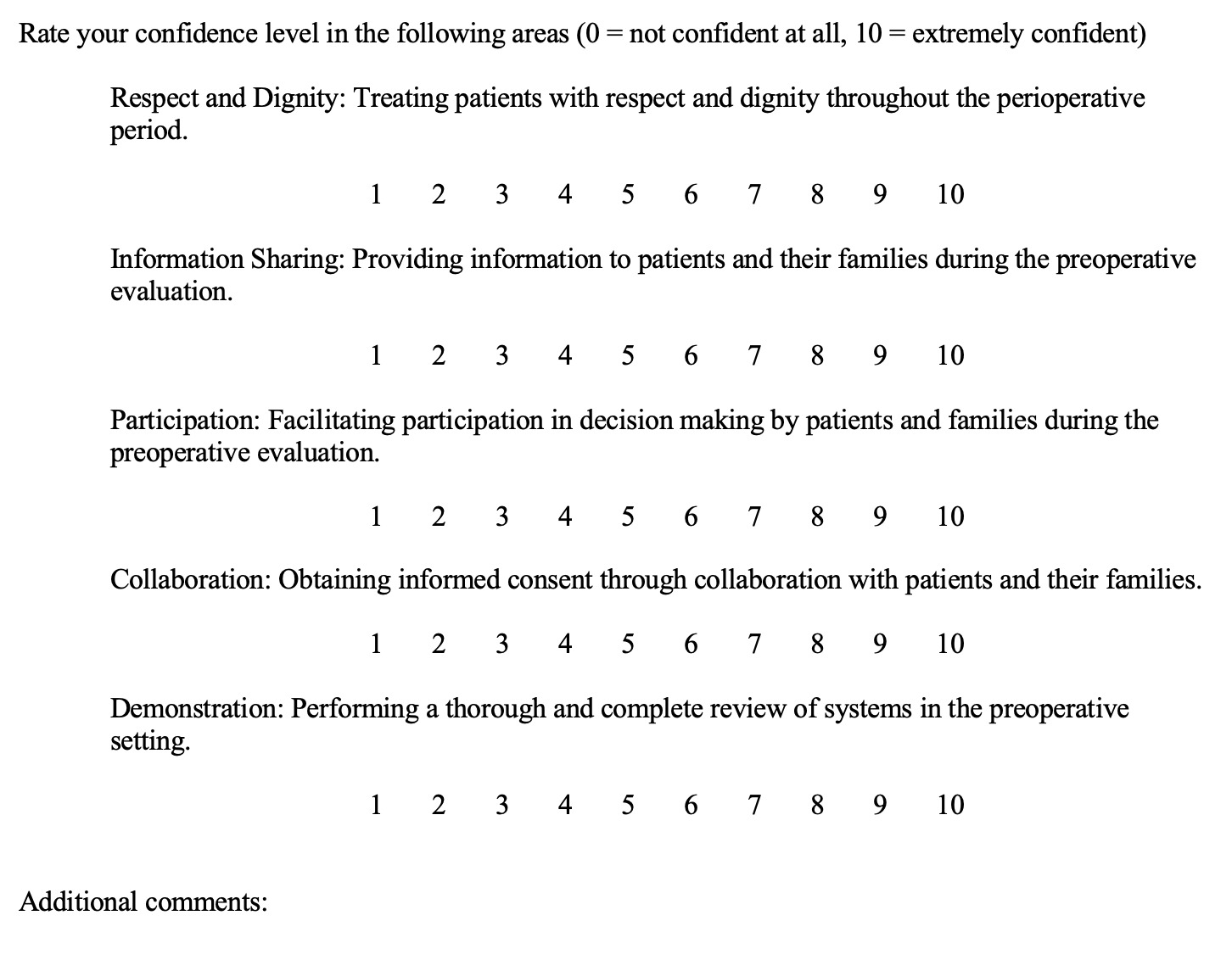
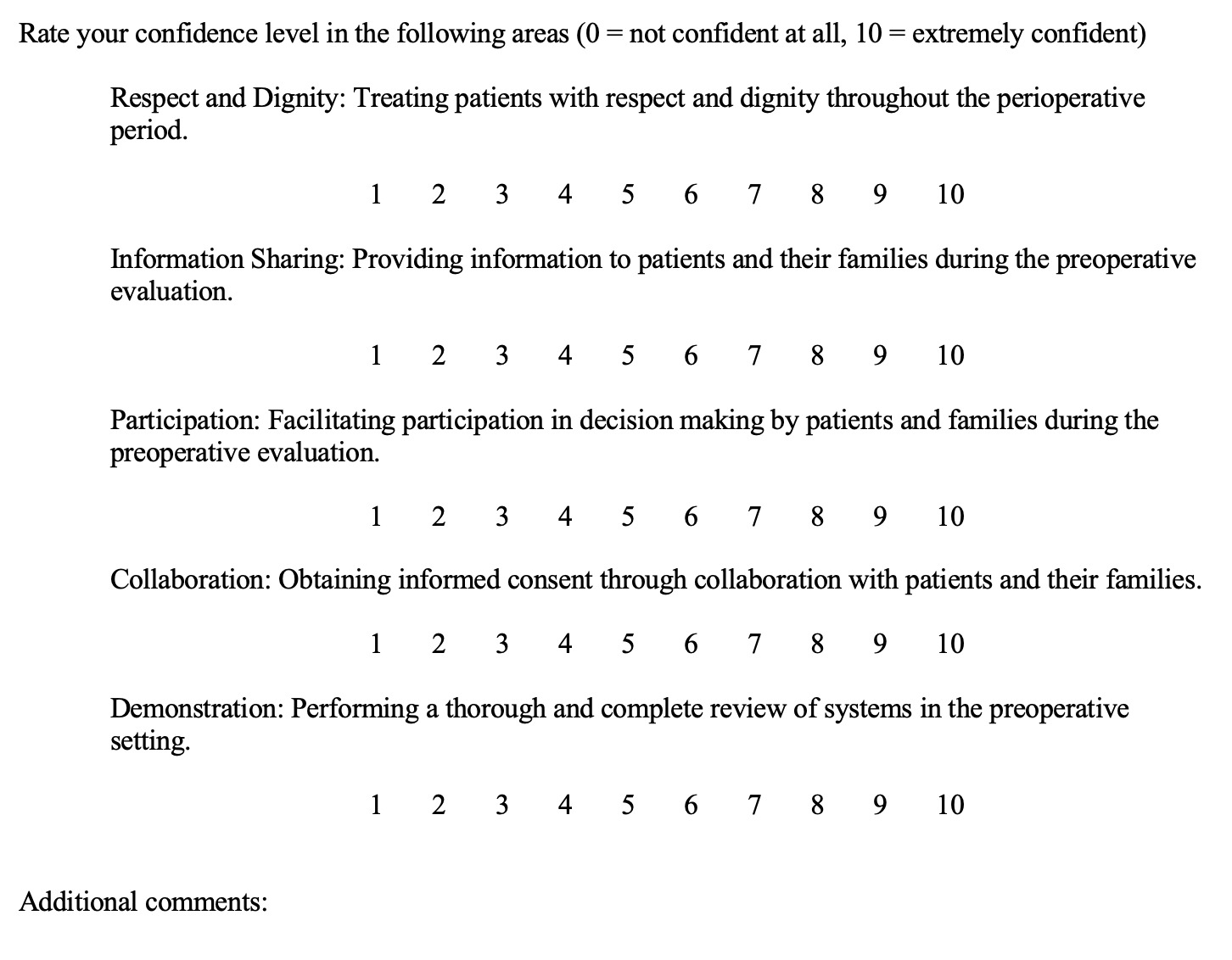
Evaluation strategies included multiple complementary tools designed to support formative feedback and evaluation of educational impact. Formative feedback checklists were used by the SPs to evaluate observed behaviors and give feedback during the debriefing related to communication, professionalism, and selected assessment skills during each encounter (Appendix A). In addition, students completed pre- and post-simulation self-confidence surveys to evaluate perceived competence across key domains of patient-centered preanesthetic evaluation, including respect and dignity, information sharing, patient participation, collaboration during informed consent, and performance of a focused review of systems (Appendix B).
The SP evaluation checklist and self-confidence survey were adapted from a previously published SP–based preoperative anesthesia simulation by Irby et al18 available through MedEdPORTAL, an open-access, peer-reviewed journal of teaching and learning resources in the health professions (https://www.mededportal.org). This resource served as a conceptual guide and evaluation tools were intentionally modified to ensure alignment with this project’s guiding frameworks and learning objectives.1
Learning Environment
Fourteen first-year nurse anesthesia students participated in the simulation during the final week of a front-loaded, 3-year curriculum. At this point in training, students had completed 1 year of foundational didactic coursework in basic sciences and anesthesia concepts, including GA, RA, and MAC, allowing the simulation to be intentionally aligned with the level of learners’ knowledge. Students attended a didactic session 2 days prior to the simulation that provided instruction on preanesthetic evaluation assessment and performance and obtaining informed consent. To support application of this content during the simulation, students were also provided with simulation objectives and patient stems 2 days in advance (Appendix C).
The simulations were conducted in a university hospital-based simulation center. This included a large briefing room and 3 preoperative exam rooms. Each preoperative room was equipped with vital sign monitors, seating, microphones, and audiovisual recording systems. This allowed faculty to observe encounters in real time from outside the room while preserving the authenticity of patient interactions. The SP wore a patient gown, was seated in a hospital chair, and had a simulated intravenous catheter secured to the skin with tape. In the large briefing room, all fourteen students completed the anonymous pre-simulation self-confidence survey (Appendix B) and then participated in a 15-minute prebrief that included orientation to the purpose and expectations of the simulation, establishment of psychological safety and confidentiality, clarification of learner roles and the fiction contract, and review of logistical details and the overall flow of the activity, utilizing a Center for Medical Simulation prebriefing tool.19 A welcoming learning environment was deliberately established to promote engagement and avoiding excessive stress that could impede learning.20 Faculty were transparent with students that this was the initial implementation of the simulation and framed the activity as a shared learning process. This explicit acknowledgement helped normalize uncertainty and modeled humility, supporting learner comfort, trust, and psychological safety.
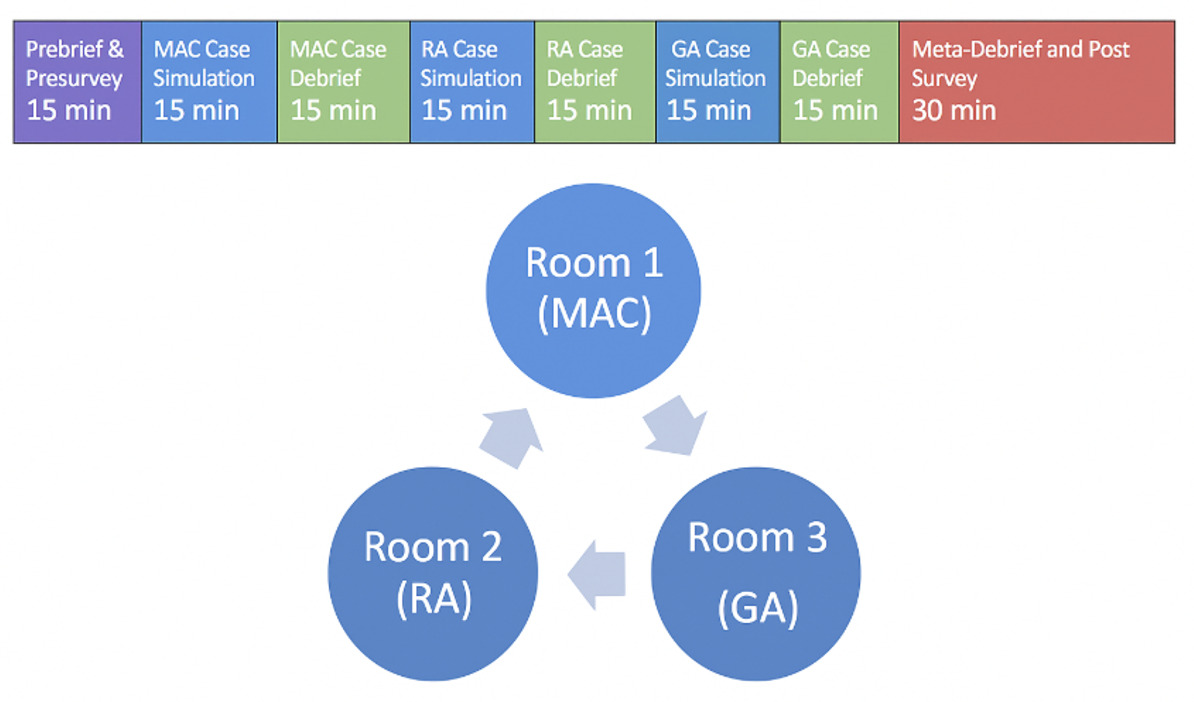
Students were then divided into 3 groups of 2-3 learners that were intentionally formed by faculty based on prior knowledge of learner performance, communication styles, and individual support needs. Groups rotated through 3 concurrently running preoperative examination rooms, each facilitated by a faculty member and staffed by a SP portraying a distinct anesthesia scenario (GA, RA, or MAC). Each group completed all 3 scenarios.
Each rotation block lasted 30 minutes and consisted of a 15-minute SP–based simulation encounter followed immediately by a 15-minute debrief conducted in the same room. During each scenario, 1 nurse anesthesia student performed the preanesthetic evaluation while 1-2 peers served as active observers. Groups remained in the room for debriefing which included the SP before rotating to the next scenario, ensuring that each student served as the primary interviewer for at least 1 case and participated in peer observation across scenarios.
One faculty member was assigned to each room to observe encounters, facilitate debriefing, and provide formative feedback. SPs were active participants in the debriefing process. During simulation encounters, faculty observers remained outside the examination rooms and monitored performance via audiovisual equipment, entering the room to conduct face-to-face debriefing. Faculty facilitation followed established simulation education best practices, incorporating the Gather–Analyze–Summarize (GAS)21 and Practical Application of Advocacy–Inquiry Learning (PAAIL)22 approaches for debriefing each session.
A simulation operations specialist maintained the session timeline, provided time cues to faculty, and coordinated room transitions to ensure consistent timing across all rotation blocks. After completing all 3 rotation blocks, the cohort reconvened in a large classroom for a 30-minute meta-debrief. The faculty guided reflection across the 3 cases while allowing learners’ experiences and observations to shape the discussion around the objectives. They also encouraged learners to reflect on how assessment and communication skills developed through their prior intensive care experience applies to preanesthetic evaluation. Learners then completed the anonymous post simulation survey. The total duration of each session was 135 minutes, with 3 simulation rooms operating simultaneously (Figure 1). Two identical sessions were conducted on the same day (total time commitment of 4.5 hours).
.png)
Results to Date/Assessment
The following results reflect evaluation data gathered during the inaugural implementation of this simulation-based curricular initiative and serve as a baseline for evaluation of future iterations. Pre- and post-simulation self-confidence survey data (Appendix B) were analyzed using the Wilcoxon signed-rank test to account for the ordinal nature of the 10-point Likert scale (Table 1).
Increases in perceived self-confidence were observed across all domains. Statistically significant gains were demonstrated in information sharing, participation, collaboration, and demonstration of review of systems. Effect sizes for these 4 domains were large (Cohen’s d ≥ 1.47). The Respect and Dignity domain did not reach statistical significance (p = .194, d = 0.35); baseline self-confidence in this domain was the highest of all domains assessed (M = 9.43).
In addition to quantitative survey data, students completed an open-response section; comments were reviewed and grouped thematically. Students frequently described the simulation as realistic, supportive, and beneficial to their learning. Representative comments included:
“The simulation was helpful prior to starting clinical in the operating room.”
“The standardized patients were very realistic.”
“There was adequate time for both the simulation and debriefing.”
“It was nice getting to practice with actors.”
“Feeling way better than before.”
“Very helpful! Would recommend continuing!”
One student identified an area for improvement, noting that more straightforward patient scenarios may be beneficial for learners early in training.
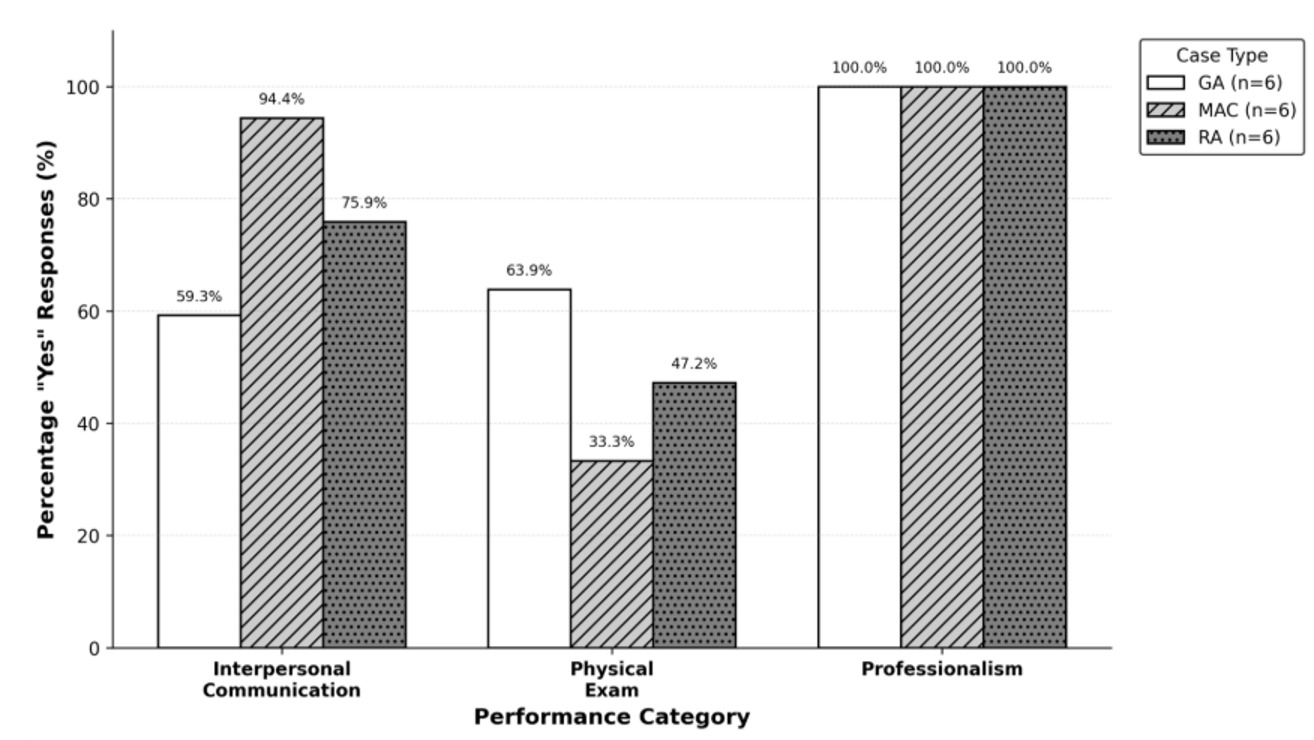
SP feedback data were also collected to evaluate observed performance in interpersonal communication skills, physical examination skills, and professionalism (Table 2).
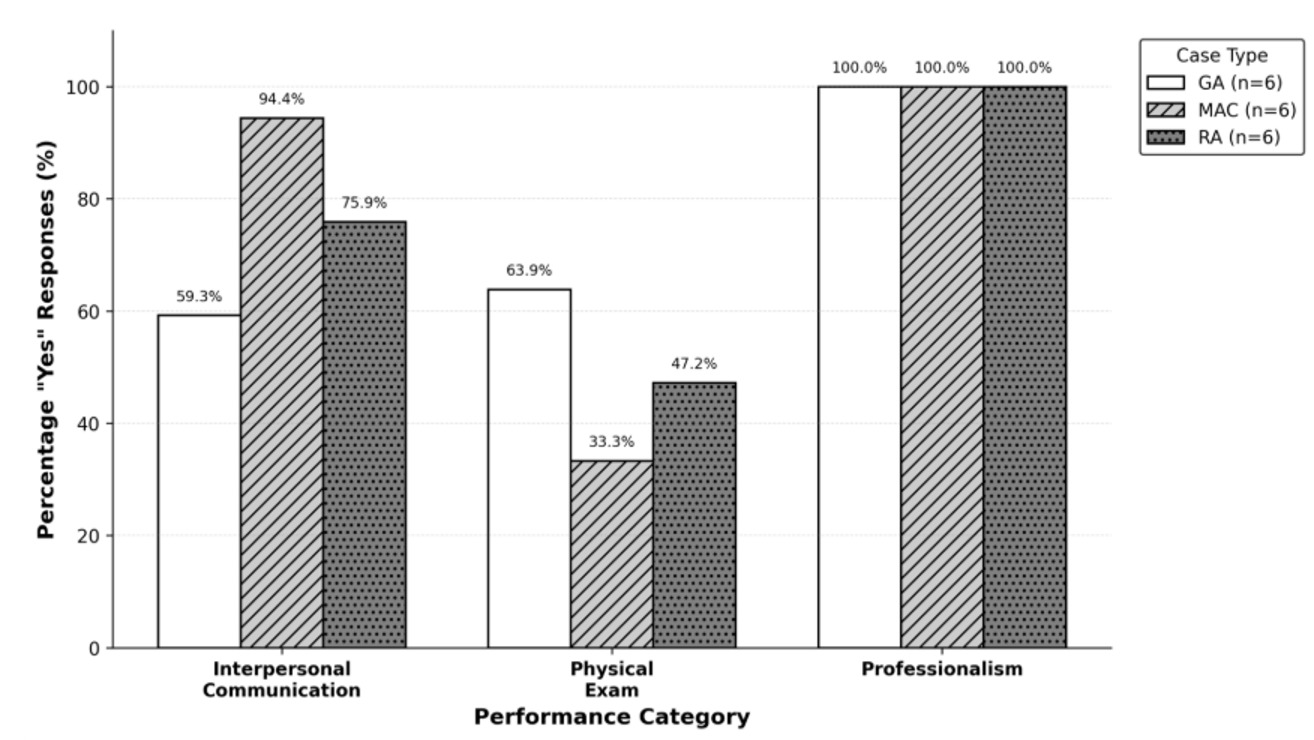
Performance data were also analyzed by case scenario type (MAC, GA and RA) and are presented in Figure 2.
Written comments from SPs emphasized the importance of empathy, presence, and patient-centered communication behaviors during preoperative interactions. Representative feedback included:
"Your warm tone helped me feel comfortable."
“You immediately sat at eye level which I appreciated.”
“You really took the time to check in after every discussion of risks. That made me feel reassured.”
“Thank you for assuring me that you would make me feel comfortable.”
“I loved that you said, ‘I want you to be informed,’ it made me feel I had some power and autonomy.”
“Thank you for the facts and reassurance.”
Discussion
This curricular initiative provided insight into the use of SP simulation to support development of patient-centered preanesthetic evaluation skills in nurse anesthesia education. Evaluation findings highlighted both areas of strength and opportunities for refinement, informing subsequent modifications to simulation design, assessment strategies, and facilitation processes.
Professionalism behaviors were consistently observed across all scenarios, and patient-centered communication behaviors were frequently demonstrated. Notably, these were first-year nurse anesthesia students without clinical anesthesia experience, yet SP feedback reflected behaviors associated with trust-building, patient autonomy, and informed consent. Within short time constraints (15 minutes) SPs observed learners taking the time to check in with them after risk discussions and explicitly noted that learners communicated in ways that conveyed patient autonomy, a core principle of informed consent. SPs also commented that learners conveyed the risks and benefits of anesthesia clearly, suggesting that foundational didactic preparation delivered prior to the simulation supported confident communication of complex clinical information. Faculty observation during encounters corroborated this impression, though systematic assessment of clinical knowledge accuracy was not formally captured in this iteration; subsequent curricular refinements addressing structured faculty assessment are described below.
In contrast, physical examination behaviors were demonstrated less consistently, and hand sanitizer use was unexpectedly low. The low reported use of hand sanitizer likely reflects the cognitive load of managing a novel encounter rather than knowledge deficit in infection control. Future iterations will explicitly identify hand sanitizer location in the environment orientation in the prebrief and results will be monitored.
The pattern of lower physical examination completion was most evident during the MAC scenario, where learners appropriately discontinued the encounter when patient history revealed chest pain requiring case cancellation. Although clinically appropriate and an initial main learning objective, this limited opportunities to perform and be evaluated on physical examination skills, which we found to be consistently lacking.
The complexity of the case also contributed to challenges in SP portrayal. Despite structured training, the scenario unintentionally evolved into how to de-escalate an angry patient. Taken together, these findings reflect a common challenge in simulation design: when scenarios incorporate complex or dramatic clinical elements, foundational skill assessment can be compromised, and SP portrayal may be more difficult to contain within intended parameters. In this case, the objective of recognizing a medically unoptimized patient, while clinically relevant, competed with the more foundational goal of practicing preanesthetic physical examination skills. In response, this objective was removed from subsequent sessions to prioritize physical exam completion and given the extent of the portrayal deviation and its impact on the learning environment, the decision was made not to retain that SP for subsequent offerings. Although the SPs completed structured training and case rehearsals, a full dry run or pilot test with a representative learner, as recommended by the INACSL Healthcare Simulation Standards of Best Practice, may have revealed the competing objectives before implementation. Such testing could have supported further refinement of the scenario and clearer parameters for SP portrayal.
To further address observed gaps in physical examination performance, targeted curricular refinements were implemented. These refinements included the development of a brief instructional video focused on the preanesthetic physical examination and introduction of a more comprehensive evaluation checklist for faculty use (Appendix D). The checklist was developed using AANA Standards 2 (Preanesthesia Patient Assessment and Evaluation) and 4 (Informed Consent for Anesthesia Care and Related Services) as reference frameworks, and content validity was supported through a modified Delphi technique among a panel of 4 faculty to achieve consensus on essential assessment components.8 Under this revised approach, SPs focus on observing and providing feedback related to patient-centered communication, while faculty evaluate the technical elements of history taking and physical examination and determine whether learners demonstrate the essential elements of informed consent. These elements include explaining appropriate anesthetic options and pertinent risks and benefits in understandable language, encouraging questions, assessing patient understanding, addressing concerns, and incorporating shared decision-making. Allowing learners to review the checklist in advance can further clarify expectations and support preparation.
These enhancements provide a solid foundation for advancing the simulation’s assessment design from a solely formative approach toward the summative, competency-based structure of the Simulation-Based Mastery Learning (SBML) framework.23 SBML emphasizes deliberate practice, structured feedback, and repeated assessment until a predefined competency standard is achieved, an alignment that bridges instructional goals with summative assessment methods and supports development of both communication and technical skills essential to safe anesthesia practice.
Finally, the debriefing process also served as a key source of insight into learner engagement and meaning-making during the simulation experience. While objective measures captured improvements in confidence and selected performance indicators, debriefing discussions revealed additional learning outcomes that were not explicitly targeted by the simulation objectives. Through facilitated reflection and peer observation, learners described the value of observing different communication approaches and recognized that acknowledging uncertainty, such as telling a patient they don’t know the answer but will find out, is an appropriate and professional response during patient interactions. Learners articulated increased comfort with being honest with patients and with seeking guidance from preceptors when needed. Final debriefing also provided an opportunity to reconnect learners with their foundational nursing identity; explicit facilitator reinforcement that communication competencies and patient-centered values developed through previous nursing practice are directly transferable to anesthesia care appeared to support learner confidence in navigating an unfamiliar clinical context. These observations highlight the role of structured debriefing as a powerful mechanism for supporting reflective practice, psychological safety, and professional identity formation in novice nurse anesthesia learners.
Limitations
As a quality improvement–focused curricular initiative, generalizability and transferability of findings is limited. Outcome assessment relied in part on self-reported confidence measures, which may not directly correlate with observed clinical competence and are subject to response bias. Although SP checklists provided structured formative feedback, these tools were adapted for local use and were not independently validated in this learner population.
Replication of this initiative may also be limited by the resources required for implementation. The full simulation session required approximately 6 hours to complete and involved 3 faculty members, a simulation operations specialist, and 3 SPs. SP recruitment and training introduced additional programmatic costs. Programs without access to a dedicated simulation center, CHSE or CHSOS-certified personnel, or SP program infrastructure may face significant barriers to replication.
Conclusion
This SP–based simulation provided nurse anesthesia students with an opportunity to integrate patient-centered communication, preanesthetic assessment, and clinical reasoning within a realistic and psychologically safe learning environment. Participation was associated with increased learner confidence across key domains of patient-centered care, and SP feedback suggested that foundational nursing knowledge and didactic preparation supported competent communication even prior to clinical anesthesia experience. Evaluation findings also identified opportunities for refinement, including gaps in physical examination practice and foundational safety behaviors, prompting targeted curricular responses that provide a foundation for advancing toward a simulation-based mastery learning framework.
This initiative reinforces several key considerations for simulation-based education programs. Clear alignment among learning objectives, scenario design, and assessment strategies is essential for meaningful outcome interpretation and intentional curricular change. Consistent SP training, developmentally appropriate scenario complexity, and structured debriefing collectively support learning fidelity, psychological safety, and professional identity formation. These findings emphasize the importance of establishing measurable objectives, prioritizing foundational skill development before introducing greater clinical complexity, and committing to iterative evaluation as a mechanism for continuous curricular improvement in simulation-based nurse anesthesia education.